The weeks and months following childbirth are often described as a time of joy, but they are also a period of intense physical change. Many new mothers find themselves wondering when (and how) they can safely return to exercise. While the idea of “reclaiming” your body and quickly fitting into your old clothes can feel tempting, today’s approach to postpartum fitness is shifting away from the number on your scale and toward whole-body health.
Rather than rushing toward a former version of yourself, modern postpartum recovery emphasizes a more gradual return to fitness. This approach centers on healing, functional strength and mental well-being instead of an arbitrary date on your calendar or the smaller clothes in your closet.
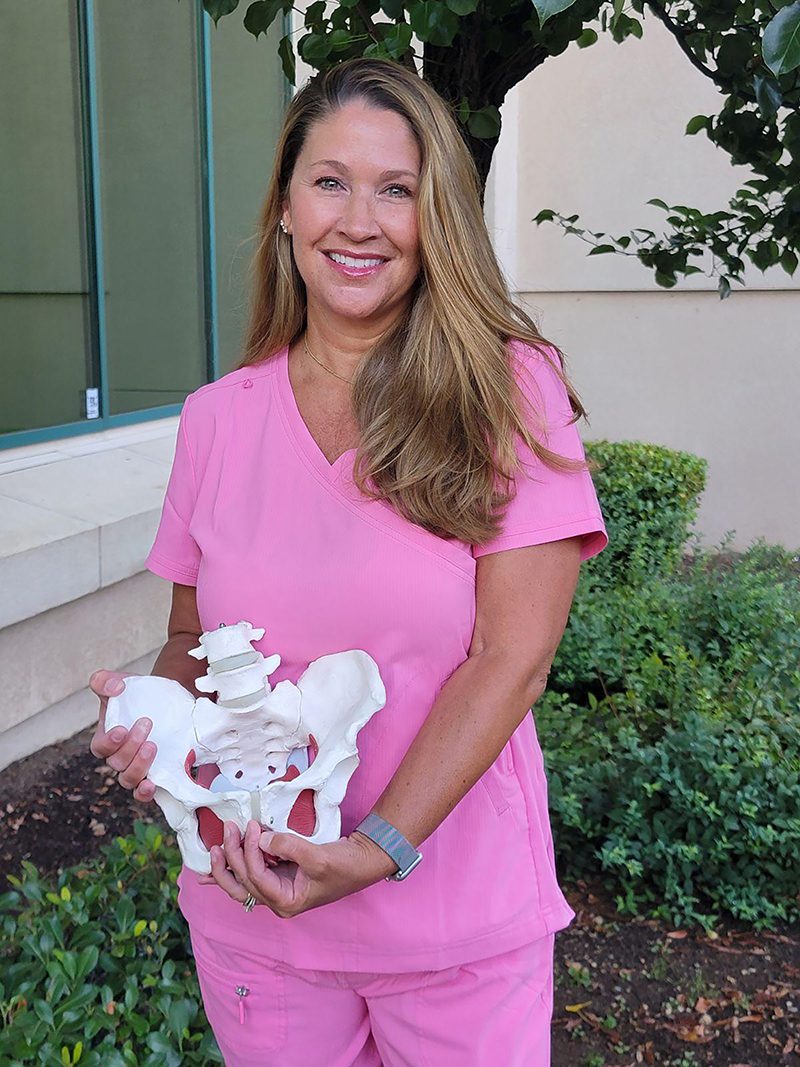
Brande Moffatt, PT, DPT, PRPC of Inner Strength Physical Therapy, specializes in helping post-partum moms and women of all ages regain pelvic health and fitness. Photo provided by Brande Moffatt.
Healing in the Fourth Trimester
Many experts describe the first twelve weeks after birth as the “fourth trimester,” a time meant not for bouncing back, but for physical and emotional recovery. Your body has accomplished something extraordinary, and it needs time to mend.
Research underscores this reality. Studies suggest that roughly one-third of women experience a clinically significant separation of the abdominal muscles (known as diastases recti) even one year postpartum. Pelvic floor concerns, including urinary incontinence, are common but often underreported. These issues highlight why early postpartum fitness should prioritize healing over intensity. “It’s not so much about WHAT you choose to do for exercise, it’s more about HOW you do it,” say Redding doctor of physical therapy and certified pelvic rehabilitation practitioner, Brande Moffatt, PT, DPT, PRPC. “When it comes to core strengthening, it’s about working “smarter, not harder.”
That said, physical recovery does not require completely ignoring your physical goals. Pelvic floor physical therapist Dr. Meagan Schwarzrock emphasizes that strength, function and appearance can coexist. “Aesthetic health goals aren’t bad, and you’re not shallow for having them,” she explains. “Your aesthetic goals are allowed to exist right beside your strength goals, your pelvic health goals, your longevity goals, your ‘I want to run without leaking’ goals. You don’t have to choose one or another.”
Gradually Returning to Movement with Intention
When your healthcare provider gives you clearance (typically around six to eight weeks postpartum), you can begin reintroducing movement. Leading obstetric organizations emphasize that a gradual return to activity is not only safe but beneficial, even when that activity is light.
Start small. Walking is one of the most accessible and effective tools available to new mothers. Even 10 or 15 minutes a day with your baby can improve circulation, boost mood and gently rebuild stamina. From there, low-impact options such as postnatal yoga or water-based exercise can support strength and flexibility while minimizing joint strain.
As you build your endurance, consider strength training that focuses on function. The goal is not huge muscles, but a body that supports the realities of motherhood. Exercises that strengthen the back and shoulders help with lifting and carrying, while glute and leg work improve stability and balance. Simple body weight movements – bridges, squats, or wall-assisted pushups – can be remarkably effective when performed with proper form and intention. “It’s not about building brute strength, rather it’s about retraining motor control, sequencing, timing, coordination and pressure management in the deep core muscles,” says Brande.
Just as important as what you do is how you listen. Sensations such as pelvic pressure, doming along the midline of the abdomen, or pain are not signals to push through. They are cues to pause.
Personal trainer and doula Laura Jawad encourages new mothers to “listen to the voice you’ve been trained to ignore.” If a movement feels questionable, that instinct is protective, especially during this vulnerable phase of recovery.
Nurturing Your Whole Self
Postpartum fitness is not purely physical. Mental and emotional well-being are deeply connected with movement. Research shows that consistent, moderate activity can help reduce symptoms of postpartum anxiety and depression. At the same time, the realities of new motherhood can make exercise feel overwhelming.
This is where patience becomes essential. Some days, rest will be the most supportive choice. For others, a brief stretch or a quiet walk outside will feel grounding and restorative. The goal is not rigid adherence to a plan, but sustainable care that fits with the life you have right now. “Moms should wake up every day and ask their body what it truly needs to feel supported, versus trying to set unrealistic goals,” Brande says.
Professor Shefali Christopher advises new mothers to progress slowly to avoid injury or burnout. “It’s good to set goals for your activity,” she notes, “but those goals should be flexible enough to accommodate days when you feel tired or sore.”
Building Your Postpartum Support System
Postpartum fitness doesn’t have to be something you tackle alone. Communicating your needs to a partner, family member or friend can help you make space for movement, whether that means time for a walk, a virtual class or simply a few quiet moments alone.
Connection with other new mothers can also be incredibly helpful. Whether in local groups or online communities, shared experiences reduce isolation and offer encouragement from those who truly understand.
Above all, remember that your worth is not measured by a number on a scale or the fit of your clothes. It is reflected in the resilience of your body. When approached with kindness and patience, postpartum fitness becomes less about appearance and more about the strength to care for your baby, to move through daily life with greater ease and to feel at home in your body again.
Begin where you are. Honor your pace. And move forward with compassion, one step at a time.
Consider reaching out to your healthcare provider or a pelvic floor specialist if you notice:
- Persistent pelvic heaviness or pressure
- Pain during everyday movements like standing, walking or lifting
- Ongoing urinary leakage beyond the early postpartum weeks
- A visible “doming” or bulging along the abdomen during exertion
- Feelings of fear or avoidance around movement
Early intervention can prevent minor issues from becoming long-term challenges. “Working with a pelvic health physical therapist allows an individual to learn or relearn the subtle nuances of core activation and timing of breath control to regain force closure in a variety of muscles that can be affected during pregnancy and delivery,” says certified pelvic rehabilitation practitioner, Brande Moffatt. “Having a pelvic health physical therapist assess your pelvic floor and abdominal muscle tone, coordination and timing can be key to guiding an effective long-term recovery. In addition, pelvic physical therapy, manual therapy and scar mobilization can all be beneficial to expediting the body’s natural healing process.”
What Counts as “Exercise” in the Early Postpartum Months
Exercise doesn’t have to look like a sweaty workout class to matter. In early postpartum life, movement that supports recovery can include:
- Gentle walks with your baby
- Stretching while your baby plays on the floor or sleeps
- Intentional breathing exercises
- Carrying and lifting with a mindful posture
- Short moments of movement spread throughout the day
Consistency, not intensity, builds strength during this season.
Questions to Ask Before Starting a Postpartum Workout Program
Before beginning a new postpartum fitness program, consider asking:
- Was this program designed specifically for postpartum moms?
- Does it address core and pelvic floor recovery?
- Are modifications offered?
- Does it encourage rest as part of progress?
- Does it support long-term strength rather than quick results?
A program that respects recovery is more likely to support lasting health. “There is so much support that can be implemented in the first few days postpartum that can set the stage for an easier recovery,” Brande says.
If you would like to learn more about pregnancy/postpartum physical therapy, visit brandemoffatt.com, or request a referral from your physician/Ob-GYN or Midwife to see Brande at Inner Strength Pelvic Physical Therapy in Redding.
Posted in: Family Life & Support

Comment Policy: All viewpoints are welcome, but comments should remain relevant. Personal attacks, profanity, and aggressive behavior are not allowed. No spam, advertising, or promoting of products/services. Please, only use your real name and limit the amount of links submitted in your comment.
You Might Also Like...

How to Make Father’s Day Meaningful (Without Making it About More Stuff)
By the time Father’s Day arrives, many families are tired. The school year has just wrapped up. Summer schedules are shifting. Camps are starting. But work has not slowed down […]
Postpartum: Tips for a Healthy Recovery
Throughout your pregnancy, you eat the right foods, drink plenty of fluids, rest and try to keep stress to a minimum. You might think once your baby arrives that you […]
Three to Six in Fourteen Weeks
One year ago we were an average family. We had three children ages 8, 6 and 2 and we were busy with the average family things like dance lessons, scouts, […]
THRIVING THROUGH a career CHANGE: Finding Stability for Ourselves and Our Families
The job market is shifting fast. Between mass layoffs, AI, automation and outsourcing, we’re not just seeing jobs cut – we’re seeing entire roles disappear. Unlike generations before us, parents […]
Resources For Children & Families Dealing With Grief
Camp Okizu; Oroville. Annual weekend bereavement camps for families and siblings who have lost a child/sibling to childhood cancer. okizu.org/programs/be¬reavement-programs. (415)382-9083. Dougy Center; Portland, OR. The National Grief Center for […]