Our grandparents’ food didn’t come with ingredient lists or warning labels. Today, food still looks familiar – but how it’s grown has changed dramatically. Understanding those changes helps parents make informed choices about what ends up on their children’s plates.
With the modernization of agriculture over the last century, farms that were once small, biologically diverse and resilient have shifted to high-yield monocrops on large acreage farms. The introduction of farming machinery followed by the gradual reliance on synthetic fertilizers and chemicals to combat pests (pesticides) and weeds (herbicides), has caused our farmland soil to become less biologically balanced and more dependent on chemical inputs.
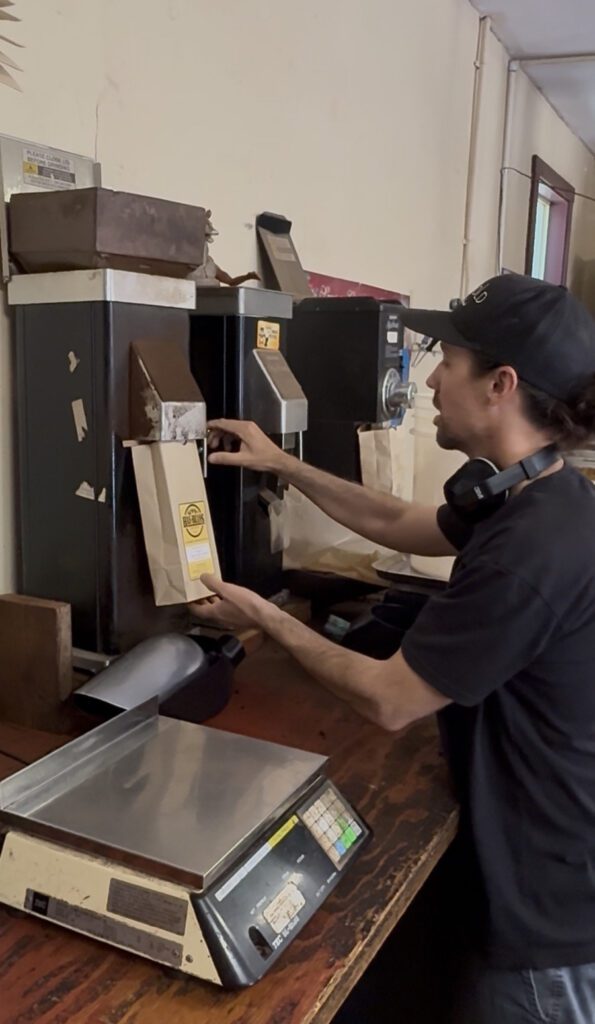
Mike Boyd is grinding up something delicious at Has Beans Coffee & Tea in Chico, where you can find a wide variety of organic coffee and blends.
Cumulative Chemical Exposure
The chemicals used to sustain our crops leave residues on our produce and grains, contaminate our livestock feed and end up in our water supply. The Food and Drug Administration, which tests the levels of over 800 chemical residues annually, may state that exposure is minimal and therefore “safe.” However, we don’t just eat one food item a day with a single chemical contaminant. The cumulative exposure to multiple chemicals in multiple foods day after day adds up quickly and our children are the most vulnerable. No “safe” level has been determined for cumulative exposure.
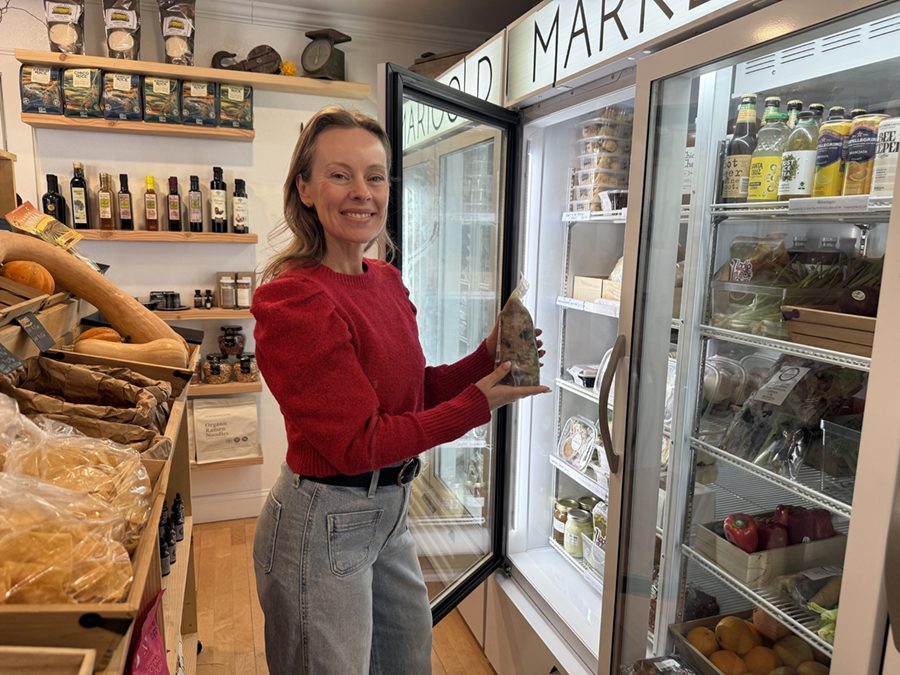
Kelly Schill thoughtfully chooses fresh
flowers and produce and beautiful handcrafts for Marigold Marketplace in Durham.
Glyphosate: A Suspected Carcinogen
Glyphosate is the most widely used herbicide in the U.S. It is used on genetically modified (GMO) crops including corn, soy and canola and as a drying agent before harvest of crops such as wheat, legumes and oats. Its effects on human health are disputed by scientists and regulators. However, in 2015 the International Agency for Research on Cancer categorized glyphosate as “probably carcinogenic to humans.” Research shows that glyphosate damages the gut microbiome leading to elevated inflammatory and metabolic markers. An altered microbiome in children may lead to a variety of health issues including autoimmune disease, allergic disorders, weight issues, digestive problems and mood and behavioral disorders. Most European countries have banned or significantly restricted its use.
However, glyphosate is just one of the hundreds of chemical residues that the Food and Drug Administration monitors in the U.S. food supply. Safety limits are set for one chemical at a time and they do not consider the additive effects of multiple chemicals interacting with each other on our bodies. Each chemical has a unique exposure profile. Chronic, low-dose exposure can stress our detox pathways and disrupt our microbiome health – leading to a host of downstream effects. Consider each chemical exposure to be a drop in a bucket; though the drop may be small by itself, the bucket will one day overflow. Children are especially vulnerable because their detox systems are immature, they eat more food per pound of body weight and they are developing their brains and immune systems.
How do we make the best decisions for our families without feeling overwhelmed by the breadth of the problem?
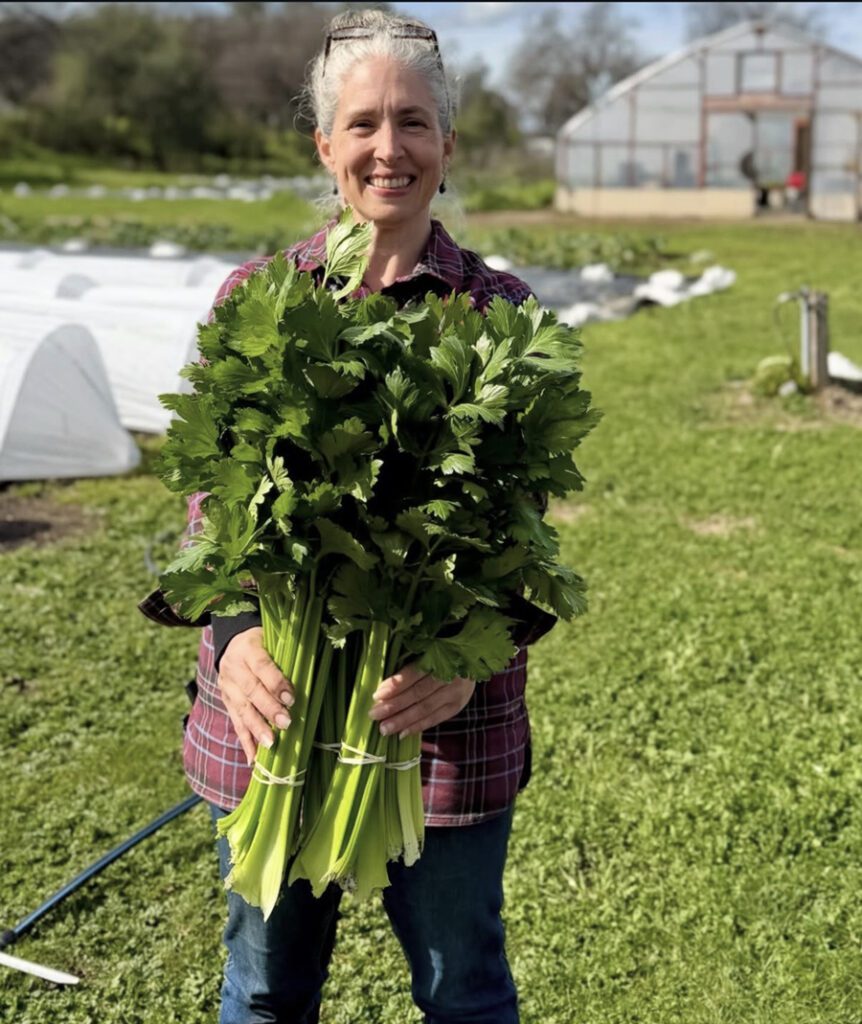
Farmer Audrey is excited about the abundant celery harvest at Red Gate Ranch. Organic celery and other organic Red Gate produce is available in season at farmers markets for CSA members. Photos by Kate Hiller
Organic Eating
Adopting an organic diet can have a significant impact on reducing chemical residue exposure. A 2020 study published in Environmental Research showed that an organic diet reduced glyphosate levels in the urine significantly in just three days. But how realistic is organic eating? Here are some important tips to consider when grocery shopping:
Prioritize the foods that your children eat daily when considering the factors listed below.
Get the Dirty Dozen list from EWG
The Environmental Working Group publishes an annual list of the most highly contaminated produce. 203 chemical residues were recently found across the dirty dozen. Find the dirty dozen at ewg.org/foodnews/dirty-dozen.php.
Reduce Glyphosate exposure
Buy organic corn, soy and canola products, including processed foods that contain these ingredients. Most corn and soy grown in the U.S. are GMO and contain high levels of glyphosate. When buying meat and dairy products, look for organic and pastured raised. Conventionally raised animals consume soy and corn feed.
Other foods high in glyphosate include wheat (breads, pastas, cereals), oats, chickpeas (hummus) and legumes such as lentils and peas. Buy these foods organic when possible.
Aim for progress – not perfection
Going organic does not have to be all-or-nothing. Remember, small, consistent changes add up over time and they do make a difference.
Posted in: Health & Nutrition

Comment Policy: All viewpoints are welcome, but comments should remain relevant. Personal attacks, profanity, and aggressive behavior are not allowed. No spam, advertising, or promoting of products/services. Please, only use your real name and limit the amount of links submitted in your comment.
You Might Also Like...

Shasta Community Health Center Brings Advanced and Compassionate Care to Northern California Families
The new C. Dean Germano Women’s, Babies’ & Children’s Center at Shasta Community Health Center in Redding offers support for low-income families and mothers braving high-risk pregnancies and provides health […]
What’s So Essential About Omegas?
You’ve probably heard a lot about the importance of getting enough Omega-3 and Omega-6 in your diet. But what are they, really? And why are they important? It’s time to […]

Two North State Organizations Focus On Healthy Eyes, Clear Vision
Watching a sunset, seeing the faces of children and loved ones, or the simple view of flower-filled grassy knolls are all pleasures in life that some people risk losing […]

Fun Ways Nature Helps Reduce Stress
Our kids are living with a lot of stress these days, including the uncertainty of schooling amid the pandemic, and navigating social media, along with the “normal” stressors of growing […]