It’s the beginning of a new school year, which for your child typically means a new teacher and maybe even a new school. For parents who have children with disabilities, sending them into a classroom with someone who may not be familiar with their needs, or even their diagnosis, can be nerve-wracking. One of the best ways to break the ice is to create a simple, one-page “At a Glance” summary of your child. Although it may seem impossible because every child is unique and cannot be reduced to a single page, it can be one of the most powerful ways to set the tone for the year ahead.
What is an “At a Glance” document?
The “At a Glance” document is a brief, parent-written summary of who your child is and what teachers need to know to help them succeed. It is not a replacement for an IEP, a medical file, or the months it takes to truly know a child. Instead, think of it as a head start and a way to skip past the trial and error that usually comes with a new person in your child’s life. It won’t tell the whole story, but it tells enough: how they communicate, what calms them, what lights them up. It is a window for someone to begin to understand who they are.
Why having an “At a Glance” page matters
A lot of people will cycle through your child’s life in a given school year; new teachers, new aides, substitutes, new therapists – the list goes on and on.
All these people may be starting from ground zero, and your child, who may not be able to communicate or self-advocate and who may behave very differently in new situations, sometimes pays the price for that learning curve.
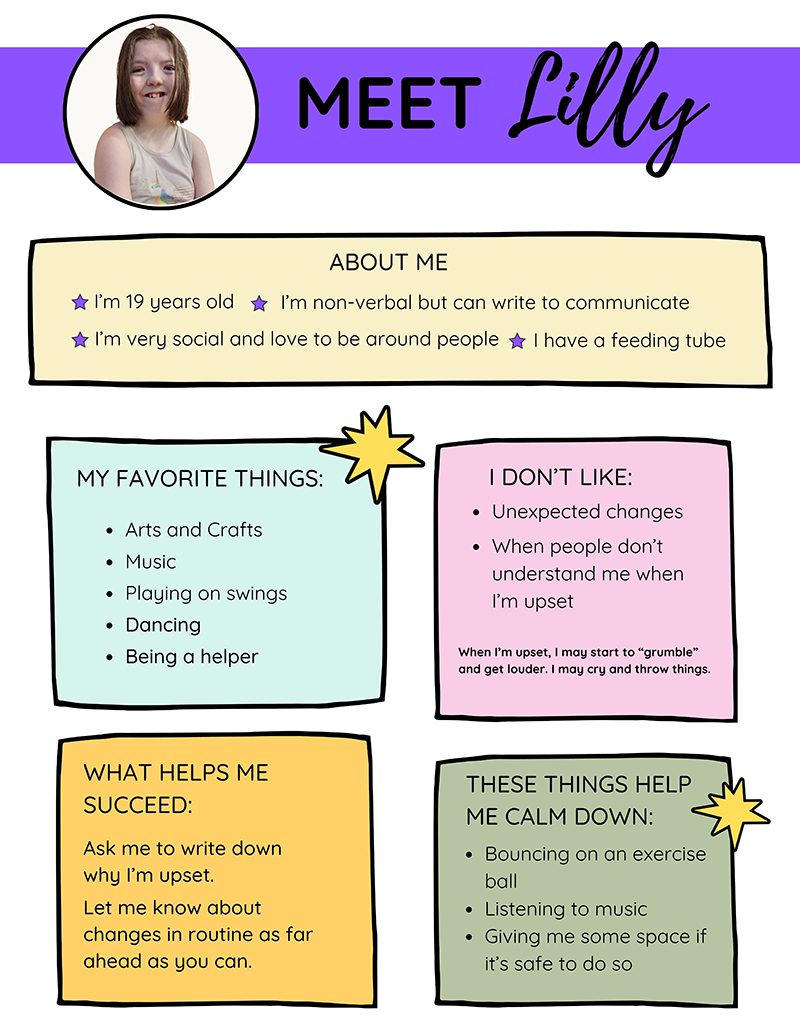
The “At a Glance” document shortens that curve dramatically.
A teacher who knows beforehand that your child needs a five-minute reminder before transitions or that your child gets overwhelmed in noisy environments will handle situations very differently from one who finds out with no warning.
What to put on your “At a Glance” document
- Start with the basics: your child’s name, date of birth, grade or placement, your contact information and a recent photo if you’re comfortable including one. Then start with the other information.
- How they communicate: Do they use verbal speech, an AAC device, picture cards or gestures? The goal is for a stranger to understand your child on day one.
- What to avoid: Note specific triggers. “Loud, unexpected sounds” or “being touched from behind without warning” give someone something they can act on.
- What works for your child: List a couple of strategies, tools or approaches that help your child during common triggers.
- Medical and safety essentials: Allergies, dietary restrictions and emergency protocol. Keep this brief but complete. If there’s a full emergency plan on file, note where to find it.
- Strengths and personality: This matters more than people realize. What does your child love? What makes them happy or upset?
- What distress looks like for your child: Every child shows stress differently. Describe the signs specific to your child and give clear, simple guidance as to what helps and what doesn’t.
A few tips for creating your document
You don’t have to be a graphic designer to create a great document. Free templates on Canva, Google and Microsoft can do the heavy lifting for you. What matters more is the writing itself: keep it in your own voice, not clinical language.
Update the document at least once a year and date every copy so whoever’s reading it knows they have the current version. The document can also be used in different settings. The same page that helps a new teacher can ease the first visit with a new doctor, specialist or therapist; anywhere your child is meeting someone who doesn’t know them yet. Lastly, have fun with it. Use your child’s favorite colors and incorporate elements that represent them. This small touch of personality reminds anyone reading it that this isn’t just a form, but a glimpse of the one-of-a-kind person your child is.
Posted in: Community

Comment Policy: All viewpoints are welcome, but comments should remain relevant. Personal attacks, profanity, and aggressive behavior are not allowed. No spam, advertising, or promoting of products/services. Please, only use your real name and limit the amount of links submitted in your comment.
You Might Also Like...

Please Turn Off the Lights! Conserving Energy in Our Homes
“Turn off that light!” is a common refrain in most households today and a friendly but stern admonition that has been handed down in families for decades. Although it still […]
A New Twist on Horseback Riding: Orland Sisters Teach Equestrian Vaulting
Once a week, Amy Tomczak and her 13-year-old daughter, April, climb on the back of a trotting horse and do handstands, somersaults and leaps, “painting pictures” with their bodies and […]

Essential Elements for a Water-Smart Family in a Dry Year
Splashing in the pool or dipping your toes into a flowing creek is excellent for a hot North State summer cool down. As temperatures rise, water usage spikes with sprinklers […]
25 Ways to Help Your Child Do Better in Math
Get a jumpstart on the new school year by thinking about ways to help your child incorporate math skills into their daily lives. These tips will help build a positive […]