by Courtney Ellington, Butte Environmental Council Executive Director
A banana peel does not look like much. Neither do coffee grounds, apple cores or limp carrots forgotten in the back of the refrigerator. But gathered household by household, those small scraps become something consequential: a local resource instead of landfill waste.
That simple transformation is at the heart of Butte Environmental Council’s (BEC) Drop in the Bucket (DitB) Program, a grassroots community composting initiative. With help from CaliforniaClimate Action Corps (CCAC) Fellows, community partners and volunteers, BEC collects household food scraps and composts them for use by gardeners and program participants. The program regularly diverts nearly 1,200 pounds of food waste each month from being discarded in our local landfill.
For North State families, the idea is refreshingly concrete. Composting can sound like one more complicated environmental task, but Drop in the Bucket reduces it to a familiar routine: separate the right scraps, keep them in a closed container, and connect them with a community system that closes the loop.
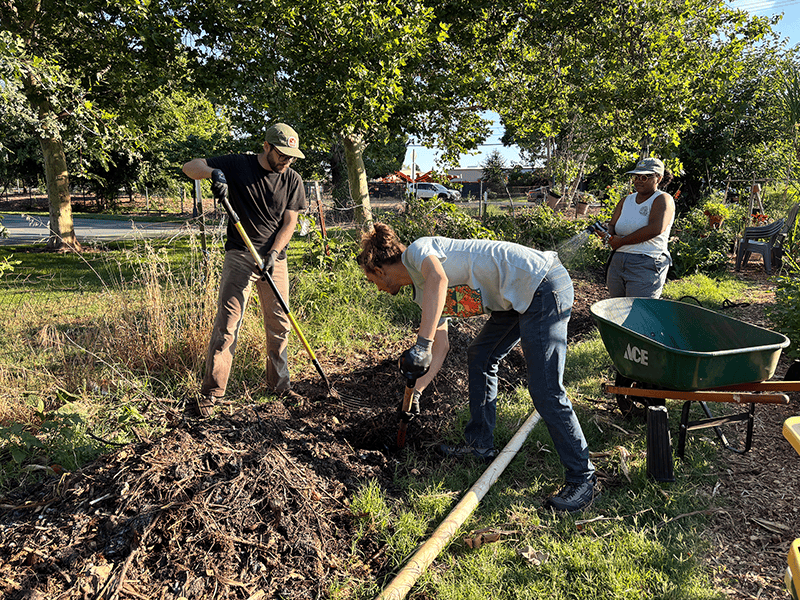
BEC’s Drop in the Bucket composting program is a model for any community that wishes to reduce landfill and encourage healthy soils.
A Circular Food Story Close to Home
When food scraps are treated as trash, their usefulness ends at the curb. Drop in the Bucket offers a different ending. Once collected, the food scraps are incorporated into one of BEC’s compost systems turning into nutrient-rich soil, enriching garden soil health and crop production. Drop in the Bucket completes a circular food loop: nutrients from the food scraps are returned to the soil, helping to grow more nutrient-rich food, and consequentially closing the loop.
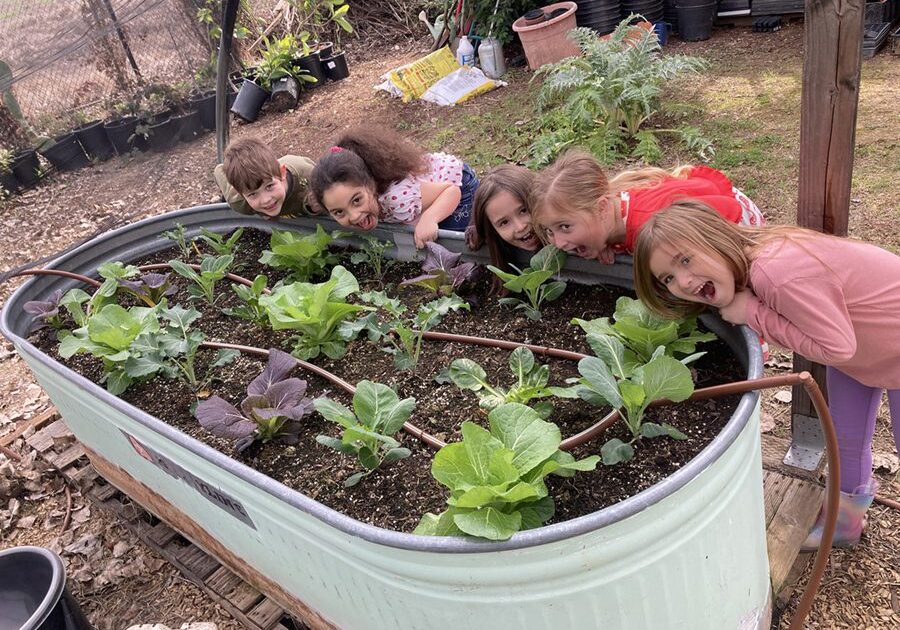
The program’s home base is connected to Oak Way Community Garden in Chico, a place where the process becomes visible. The garden links waste reduction with food growing, volunteerism and neighborhood life. That makes composting easier to explain to children: what looks like “garbage” inthe kitchen can become dark, crumbly material that supports healthy soil and growing healthy food.
Why the Food Collection Bucket Matters
DitB is a small-scale grassroots donation-based program, but that is part of its power. The program has two main goals: reducing the amount of waste sent to the landfill and cutting methane emissions associated with discarded food. 22% of the municipal solid waste in landfills isfood waste, contributing to methane emissions as the food waste breaks down, producing a liquid called leachate. As that leachate heats up, gas emissions are released into the atmosphere in the form of methane.
Through Drop in the Bucket initiatives, collectively we can reduce the amount of municipal solidfood waste, in turn reducing the amount of methane emissions released into the atmosphere, byclosing the loop and increasing our local soil health and air quality.
Education and Community Involvement
The program produces nutrient-rich soil for local community gardens and BEC volunteers to utilize in their own garden. Participants can see how a weekly household habit contributes to a shared outcome.
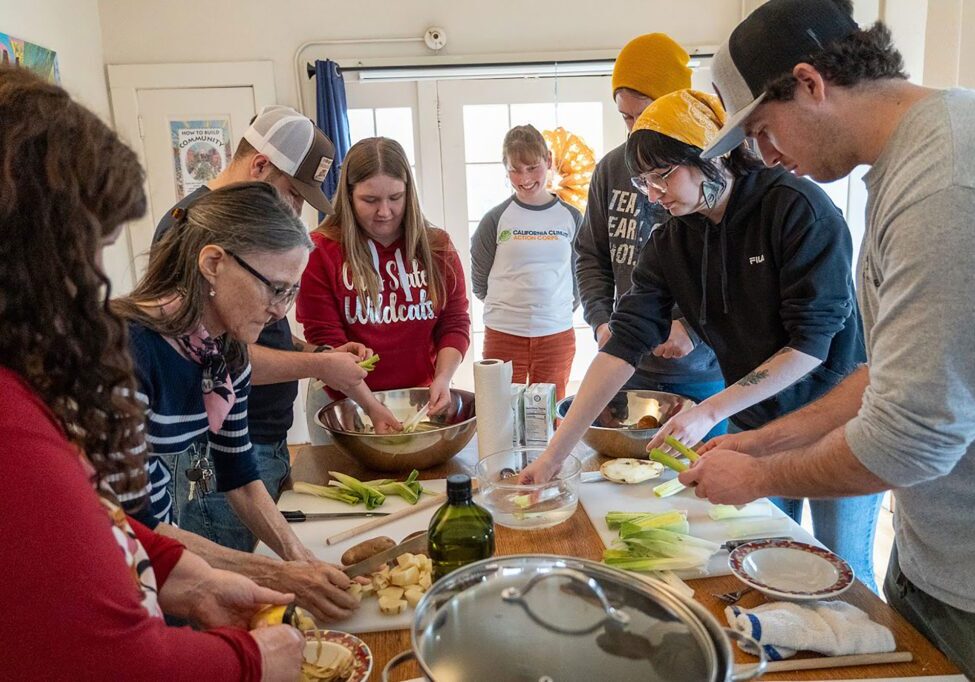
For children, the bucket can become a hands-on science lesson. Families can notice how much food they discard, talk about meal planning and learn which materials break down. Even preschoolers can help identify a fruit peel or sprinkle coffee grounds into the collection container.Older children can weigh a week’s scraps, keep a simple tally or investigate decomposers and the soil food web.
The most useful lesson may be that environmental care is not reserved for experts. It can begin with attention: noticing what we throw away, learning the rules of a local program and taking onerepeatable action together.
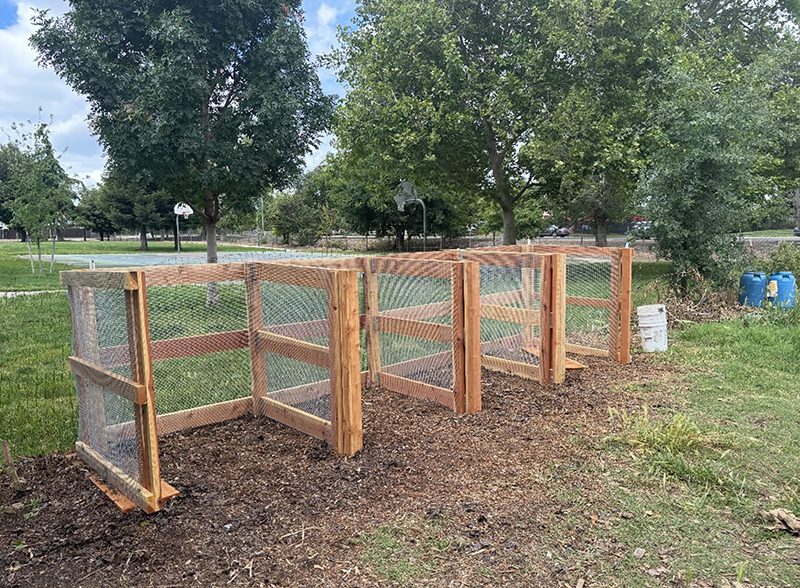
Dividing compost piles is a simple way to turn kitchen waste into nourishing garden soil.
Photos provided by Butte Environmental Council.
A Program Growing with Its Community
BEC is actively seeking to grow the program, accepting additional households, local businesses and small family farm food waste. BEC picks up food scraps weekly from households andbusinesses, with the ability to pick up on a biweekly or monthly basis, depending on the needs of each location.
How to Get Involved with Drop in the Bucket
- Register for Drop in the Complete BEC’s form so staff can share current intake-site and participation details. bit.ly/BEC-dropinthebucket
- Volunteer. Ask about composting, food-scrap collection routes and garden BEC has used volunteer sessions to teach composting, food-waste diversion and soil science. sustainability@becnet.org
- Complete the community survey. Share what would make local composting more accessible for your household. ly/CompostQuestionnaire?r=qr
- Donate. Contributions help support the program’s bit.ly/drop-it-bucket
- Stay current. Visit BEC’s program page before setting out scraps; pickup and drop-off capacity can change. org/our-programs/action/drop-in-the-bucket.
Posted in: Planet Support

Comment Policy: All viewpoints are welcome, but comments should remain relevant. Personal attacks, profanity, and aggressive behavior are not allowed. No spam, advertising, or promoting of products/services. Please, only use your real name and limit the amount of links submitted in your comment.
You Might Also Like...
Teaching Our Children to Care for the Earth
“We are born with a connection to nature,” says Tim Corcoran in his book The Earth Caretaker Way. “But as we grow, we may lose conscious touch with that […]
A Living Classroom at Hearthstone School
The first thing one notices when arriving at Hearthstone School in Oroville is that the garden out back is not what you’d expect. There are no tidy raised beds with […]
Butte Environmental Council: Advocating for a Healthy Community
Located in gorgeous Butte County, the Butte Environmental Council (BCE) is a grassroots nonprofit organization dedicated to protecting the environmental health of Butte County. Supported by 300 members, over 1,000 […]
In the Zone with Green Loan Support
Reduce, reuse and recycle are words most of us have heard since childhood. But for GreenLoan Support in Tehama County, it’s not just talk. GreenLoan Support means to make this […]
How Student Art Can Help Tackle Plastic Pollution
By Nathan Fairchild, Director of Science Programs, Shasta County Office of Education and Virginia Phelps – environmentalist, with contributions by environmentalist Ellen Sweeney, retired biochemist Geneva M. Omann, Ph.D. and plastic pollution artist Debra […]