It’s always scary when a child with a disability is in a situation where they need first responders, whether it’s a paramedic during a medical emergency, law enforcement looking for them because they eloped, (when a child intentionally or impulsively leaves a safe area or caregiver’s supervision without permission), or a firefighter assisting in a wildfire or house fire
response. For the parents of these kids, there is another layer of fear: How will these first responders handle their child who may be nonverbal, resistant to help or aggressive?
Knowing how to communicate and convey information effectively matters because emergencies are fast-paced. A first responder may be in your house for less than 15 minutes, and in that window, they must figure out what’s wrong, decide how urgent it is and choose what to do about it.
A law enforcement officer looking for your child also has very little time before the search gets harder. Knowing whether your child will respond to their name and whether they’ll run toward or away from a stranger changes how the whole search effort is organized. First responders build a picture of your child from whatever information is available – and if that picture is missing a piece, they may fill the gap with the most common explanation rather than the right one.
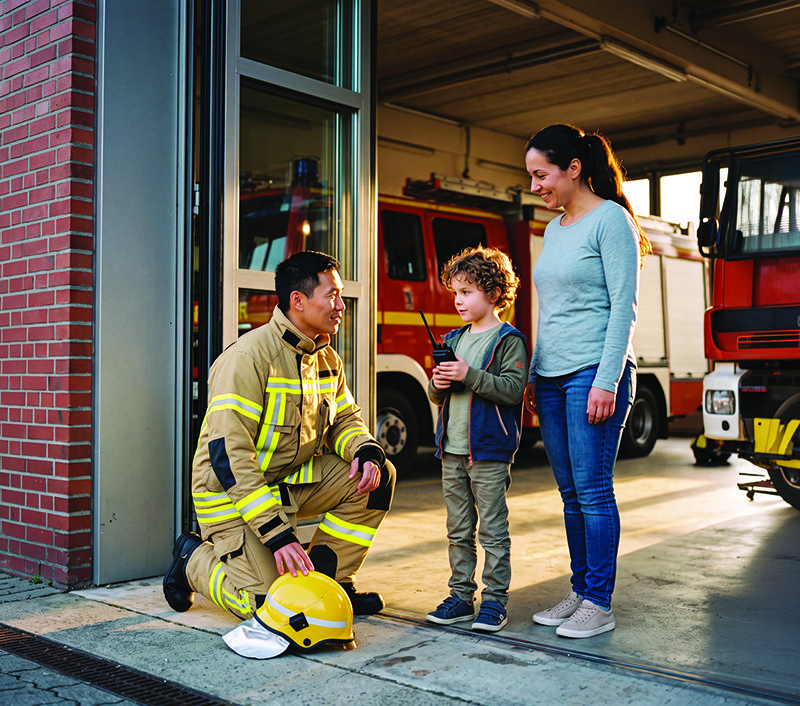
Your child may feel more comfortable with the appearance and uniforms of local emergency personnel if you and your child introduce yourselves. It can also alert local fire and law enforcement to recognize and understand your child’s special needs should he or she elope frequently – or if meltdowns could be misinterpreted by well-meaning community members who call 911.
What First Responders Need to Know About Your Child With Special Needs
When you’re in the middle of a crisis, it’s hard to think straight. You need to communicate the most important and relevant information about your child, but you may find yourself panicking and unable to relay what you need to.
A solution to this is to write or type out a one-page bulleted list of the most crucial information that first responders will need to know, such as:
• How your child communicates (if they are nonverbal)
• Primary diagnoses
• Current medications
• Allergies, including latex and adhesives
• Medical devices
• Baseline behaviors versus distress behaviors
• How they show pain
• Sensory issues
• Elopement risk
• What helps them calm down
• Who has legal authority to represent them (for older teens & young adults on conservatorship)
Keep copies where you will easily find them in an emergency. Hang one on the refrigerator, put one in the glove compartment of your car and upload digital copies onto your phone. The point of the list is for someone to understand your child’s most pressing needs in a very short time because in an emergency no one will have time to flip through the thick medical binder you have carefully curated.
How to Be Proactive Before an Emergency
Along with making a list before an emergency occurs, it’s always a good idea to familiarize yourself with your local emergency response teams, especially in the rural areas here in the North State, where the first person to answer a call may be a volunteer firefighter.
Most fire stations are happy to have visitors, and a quiet weekday morning is usually the best bet. For many children, meeting firefighters and paramedics and seeing fire engines and ambulances up close and personal in a calm environment can take away a lot of fear.
Introducing yourself and your child to local law enforcement can also go a long way if your child elopes frequently or if meltdowns could be misinterpreted by well-meaning community members who call 911. You can also call local nonemergency assistance services and ask about their special-needs registries or safety programs. None of this guarantees things will go smoothly. Crises are messy and chaotic, and no amount of preparation makes them otherwise. But preparing yourself and your local first responders in advance can give you a little more peace of mind when almost nothing is under your control.
Posted in: Parenting

Comment Policy: All viewpoints are welcome, but comments should remain relevant. Personal attacks, profanity, and aggressive behavior are not allowed. No spam, advertising, or promoting of products/services. Please, only use your real name and limit the amount of links submitted in your comment.
You Might Also Like...

A to Zen for Teens: 26 Ways to Help Your Teen Find More Peace
Does your teen seem frazzled and stressed? Teens face stress from many directions, and so do their parents. We can all benefit from more calm; however, teens may not be […]

A Heart For Giving
As a mother, I believe one of the most valuable gifts that I can give to my children is a heart for giving. In a society that places immense value […]

Holiday Gifts That Educate and Delight Children of All Ages
As they gear up for the holiday season, parents and grandparents head out to what often seems a “shopping jungle” to purchase toys and gifts that will bring joy to […]
Science Fair Projects: Tackling the Challenge of Choosing a Good Research Question
If you are a student, you may have discovered that one of the most challenging parts of the science fair process is choosing a researchable topic that is both relevant […]