For families raising children with disabilities, the instinct is often to think about accessibility in the most traditional sense: ramps, grab bars and wider doorways. But the world of home modification has expanded dramatically, offering solutions that address a wide spectrum of physical, behavioral and sensory needs.
Safety Modifications for Peace of Mind
For parents of children with autism, cognitive disabilities or conditions that affect impulse control, one of the greatest fears is “eloping.” Many children slip out of unlocked doors or windows undetected. Door alarms and window lock systems are a simple, affordable solution that can provide enormous peace of mind. Many are available at hardware stores for a low cost. Small doorbell cameras are also an option and several models have settings that alert you when someone opens the door and leaves.
Other budget-friendly safety upgrades include anti-scald devices on faucets and showerheads, which are critical for children who cannot regulate water temperature themselves and impact-absorbing foam or rubber flooring in play areas to cushion falls. The nice thing about many of these modifications is that they are DIY-friendly and can be implemented over a single weekend without professional help.
A Sensory Space for Finding Calm
For families of children with autism, sensory processing disorder or ADHD, sensory spaces can be transformative. These dedicated areas are designed to calm an overwhelmed nervous system through carefully chosen lighting, sound, texture and movement. Think dimmable or color-adjustable lighting, weighted blankets, tactile wall panels and soft, enclosed seating. If you have limited square footage, you can still create an amazing sensory space. A corner of a bedroom outfitted with calming elements that are tailored to your child’s needs can be just as effective.
Upgrades That Preserve Dignity and Independence
The bathroom is one of the most important rooms to address, but the options extend well beyond the standard grab bar. Roll-in showers with handheld showerheads, adjustable-height fixtures and non-slip flooring can make bathing safer and more independent for children with a range of physical disabilities.
In the bedroom, specialty enclosed bed systems can prevent nighttime falls for children who roll or move unpredictably during sleep. And for families managing children who require frequent physical transfers from bed to wheelchair to bath, ceiling-mounted lift track systems are residential options many parents simply don’t know exist. Though they require professional installation, they can reduce the physical strain on caregivers and preserve the child’s dignity during transfers.
Smart Home Tools Already Built for Accessibility
The same smart home devices that millions of households already use for convenience can serve as powerful assistive technology. Voice-controlled lighting,
thermostats and door locks through systems like Amazon Alexa or Google Home can give children with limited mobility meaningful control over their environment – a significant boost to independence and self-confidence.
Video monitoring systems allow parents to keep an eye on children in other rooms, while dedicated charging and docking stations for augmentative and alternative communication (AAC) devices keep critical communication tools organized and ready to use.
Making It Happen Financially
The prospect of home modification can feel overwhelming, especially when budgets are tight, but there are several resources available to families in California who are interested in home modification.
The first step is to get an occupational therapist’s written assessment of your child’s modification needs. This strengthens any application you pursue, so it’s important to request one early in the process.
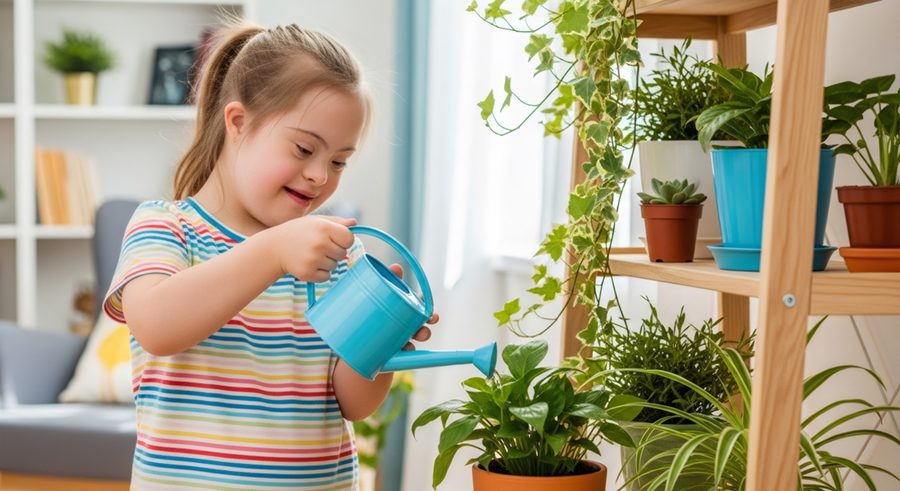
Simple steps can modify a home so that it truly works for your child. Every adaptation, no matter how small, is a tangible act of love and advocacy.
Step two is calling Far Northern Regional Center. Regional Centers coordinate access to state waivers and connect families to funding for modifications.
The HCBS-DD Waiver covers home accessibility adaptations for children with a developmental disability diagnosed before age 18 and requires Medi-Cal eligibility.
The California Home and Community-Based Alternatives (HCBA) Waiver is designed for children who are medically fragile or technology-dependent. It covers environmental accessibility adaptations, assistive technology, private duty nursing and family and caregiver training and is available for eligible individuals from birth and up.
The Self-Determination Program (SDP), through the Regional Center, gives families more flexibility in directing services, which can include home modification needs.
Additionally, the California Home Accessibility Program (CHAP) is a state financial assistance program that provides funding for accessibility features such as ramps, lifts and grab bars for eligible homeowners.
hether it’s a low-cost door alarm or a ceiling lift system, every modification is a step toward having a home that truly works for your child. It’s easy to focus on what still needs to be done, but every adaptation, no matter how small, is a tangible act of love and advocacy. The journey looks different for every family, but the result is the same: a space where your child can thrive.
Shasta County author Jennifer Arnold is the mom of four, two of whom have been diagnosed with multiple special needs. She hopes to raise awareness of many issues that parents of special needs children face on a regular basis.
Posted in: Home Improvement

Comment Policy: All viewpoints are welcome, but comments should remain relevant. Personal attacks, profanity, and aggressive behavior are not allowed. No spam, advertising, or promoting of products/services. Please, only use your real name and limit the amount of links submitted in your comment.
You Might Also Like...

Make A Lasting Impression With A New Door
Many people may not be able to buy a dream home or do a complete home remodel in the current slow economy, but one affordable way to spruce up a […]

Color Trends 2026 – Fresh & Timeless
2026 finds us leaning away from the cool sterility of grays and crisp whites and into an era of warmth, depth and intention. The key to keeping 2026’s colors timeless […]

Solar Thermal Water Heating: Efficient and Green
Solar thermal is considered a renewable and green resource for hot water heating. A solar water heating system captures the warmth of the sun, transfers that heat to water, and […]