We all cheer when our children sing the alphabet song for the first time or recite bedtime stories from memory. Parents understand how vital reading is to future school achievement. But did you know preschool math has just as big of an impact on preschool brains? Research shows that early math ability is just as strong a predictor of future academic success as reading skills.
Fortunately, preschool math is everywhere young children live and play, whether it’s counting goldfish during snack time, sorting socks during chore time or identifying foam numbers in the bath. “In our work at the Shasta College Early Education Center, we recognize that math emerges naturally through children’s play, relationships and investigations,” says Beverly Mullally Charsha, MA, director, Early Childhood Education Center at Shasta College. “Rather than isolated lessons, we focus on creating environments that invite inquiry—where children explore patterns, relationships and problem-solving in meaningful contexts. When math is rooted in real experiences, it becomes both joyful and deeply understood.”
Here are some ways to engage little learners in the world of math.
Fun with Food Shapes
Shape sandwiches, fruits, crackers, cookies and cakes with cookie cutters. Talk about the natural shapes that vegetables take. Pizzas, pancakes and cookies are circles. Many crackers are squares, rectangles and triangles. Teach your child patterns by putting several different shaped crackers together in a row. What different shapes can your child make by combining foods?
Laundry Lessons
Sort the laundry by colors, family members or type of clothing (pants, skirts or shirts). Have your preschooler match the socks. If you have socks left over, introduce the concept of even and odd. Matches make even numbers; leftover socks make odd numbers.
On a Roll
Card and dice games teach children how to subitize. Subitizing is the ability to look at small sets of numbers and quickly know how many numbers are in the set. An example of subitizing is automatically knowing the number when rolling dice without counting dots. This is an important skill that preschoolers will need later when they add and subtract. Card games to try: Crazy Eights, Old Maid and Go Fish. Dice games: Beat That! Roll and Cover and One and Done.
Not Just Fun and Games
I know, playing Chutes and Ladders for what seems like the millionth time is not fun for adults. But it is fun for preschoolers and playing it helps them develop some important math skills like number recognition and counting forward and backward. The number line is a powerful visual model for adding and subtracting and Chutes and Ladders is an engaging way to use that model. Other preschooler board games that support early math skills are Hi Ho! Cherry-O and Feed the Wozzle.
Math Through Movement
Preschoolers love to be active and physical exercise is a way for preschoolers to practice counting and learn directionality vocabulary. Have your preschooler count the number of jumping jacks, jump rope hops or toe touches he or she does. Play hopscotch and count the numbers as they jump. Learning directional words like on, over, before, between, right, left, front and back is important, too. As they exercise, have children move according to those words.
Math Melodies
Goofy songs and sayings help children remember and preschoolers are totally into silly. Sing math songs in the car, while you swing and when you are doing chores. Five Little Monkeys Jumping on the Bed, The Ants Go Marching On and One, Two, Buckle My Shoe are good examples of catchy rhyming songs that get preschoolers’ attention. Numberock has fun math videos and songs for preschoolers and older children. If your child loves reading, many traditional math songs and rhymes are made into books.
Block Power
Stacking blocks or building with Legos is a powerful way to build early math skills with preschoolers. Counting, measurement, pattern recognition and critical thinking skills that promote STEM are a few of the benefits of building with blocks.
Market Math
The grocery store is stocked full of math. When you are in the produce department, help your preschooler count and weigh fruits or vegetables without going over a certain number of pounds. Explore price tags and sale tags, count the number of items you need or that are in the cart, identify foods by shape. Granted, some of the math may be too complex for a preschooler, but if they shop with you regularly, they will pick up skills as they grow.
Bubble Bath Math
Preschoolers often end each day in the bathtub, another place for preschool learning. Foam numerals stick to the tub walls when they are wet. Call out a number and have your child quickly identify the correct foam numeral and slap it to the tub wall. Have your preschooler practice ordering and counting the foam numerals. Add toys to the bath one-by-one and count on each toy added. Take toys out of the bath and ask your child how many toys are left. Sort toys by color, shape or size or have your child subitize sets of toys in the water.
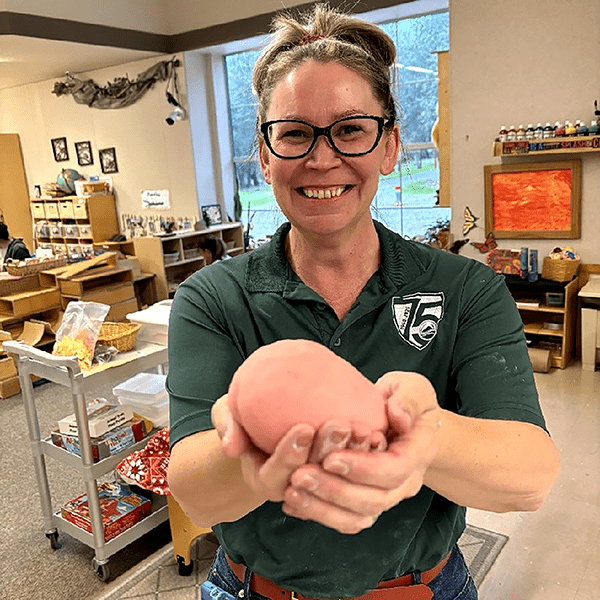
Beverley proudly displays her homemade play dough used to teach preschoolers many pre-math concepts, preparing them for success in math and science. Photo provided by Beverly Mullaly Charsha
Make Play Dough
“Making playdough naturally builds early math skills because children engage in hands-on measuring, counting, and comparing as they create it,” says Beverly. “ They practice concepts like quantity when adding cups of flour or teaspoons of salt and begin to understand fractions and proportions by following a recipe. As they mix and adjust ingredients, they explore cause-and-effect and problem-solving, noticing how changes in amounts affect texture. This kind of sensory, real-world experience helps children develop foundational math concepts in a meaningful and engaging way.” Try the easy play dough recipe in the sidebar with your child.
Math for preschoolers is foundational, but it can also be fun. Try some of these ideas and pave the way to future successes in school and beyond.
Picture Books that Count
These engaging reads bring math skills and literature together for young children.
 Counting
 Counting
• Ten Black Dots by Donald Crews
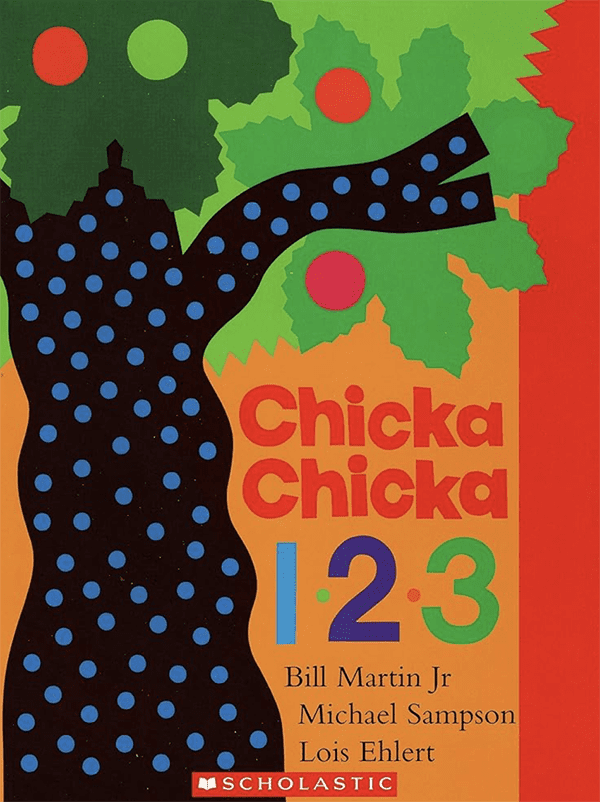
• Chicka Chicka 123 by B. Martin Jr, M. Sampson & L. Ehlert
• Mouse Count by Ellen Stoll Walsh
• The Crayons Book of Numbers by Drew Daywalt
• Ten Flashing Fireflies by Philemon Sturges
Patterns
 Patterns
• Pitter, Pattern by Joyce Hesselberth
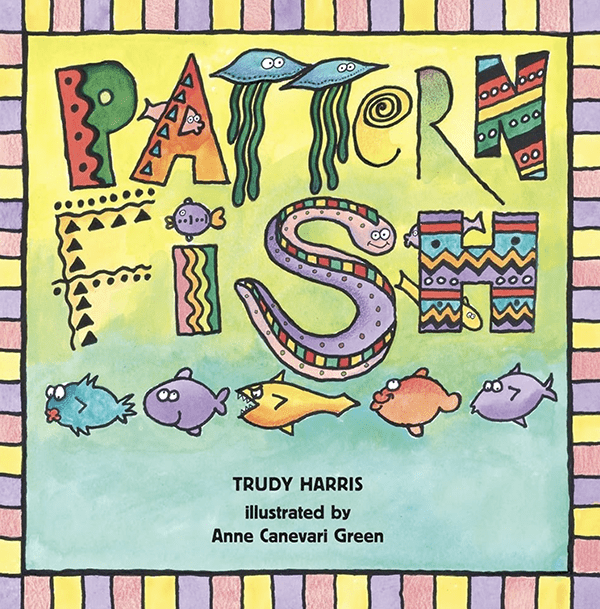
• Pattern Fish by Trudy Harris
• Beep, Beep, Vroom, Vroom! By Stuart J. Murphy
• I See a Pattern Here by Bruce Goldstone
Shapes
• Mouse Shapes by Ellen Stoll Walsh
• Tangled: A Story About Shapes by Anne Miranda
• Shape by Shape by Suse MacDonald
• Ship Shapes by Stella Blackstone
Spatial Reasoning
 Spatial Reasoning
• Shrinking Mouse by Pat Hutchins
• Over, Under and Through by T. Hoban
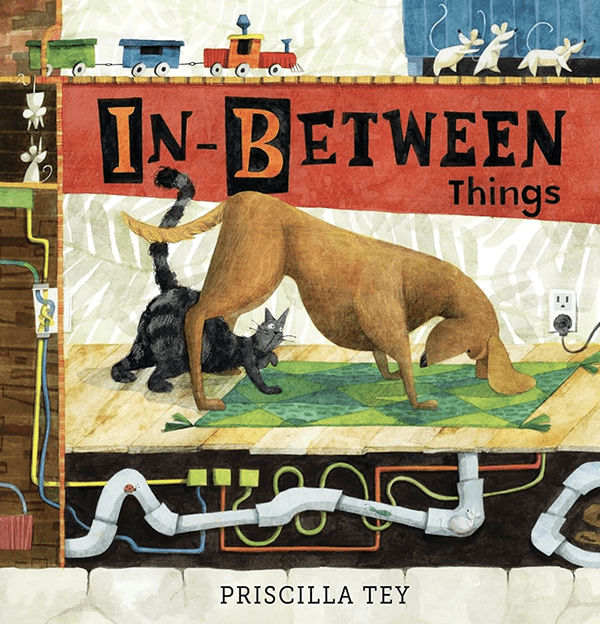
• In Between Things by Priscella Tey
And so many more! Go to zerotothree.org for more math & science toddler book suggestions
Beverly’s Playdough Recipe
• 2 cups all-purpose flour • 3/4 cup salt
• 4 teaspoons cream of tartar • 2 cups lukewarm water
• 2 tablespoons vegetable oil • Food coloring
• quart sized bags
Mix the flour, salt and cream of tartar in a large pot. Add the water and oil, and if you’re making a single color, mix in the coloring at this stage. Place the pot over medium heat and stir continuously until the mixture thickens and forms a ball. I like to use a nonstick electric skillet on very low heat. Remove it from the heat and transfer the dough to a gallon-sized bag or a sheet of wax paper. If you don’t have any of those items, place a small handful of flour on the table. Let the dough cool slightly, then knead until smooth. Kneading warm play dough on a cold day is the best!
If you plan to use multiple colors, divide the dough into separate portions based on how many colors you want. Place each portion into a quart-sized bag, add about five drops of coloring (adjusting for brightness as needed), and knead the dough inside the bag to avoid staining your hands. Once fully mixed, it’s ready to use.
Posted in: Parenting

Comment Policy: All viewpoints are welcome, but comments should remain relevant. Personal attacks, profanity, and aggressive behavior are not allowed. No spam, advertising, or promoting of products/services. Please, only use your real name and limit the amount of links submitted in your comment.
You Might Also Like...
A Heart For Giving
As a mother, I believe one of the most valuable gifts that I can give to my children is a heart for giving. In a society that places immense value […]

When Gratitude Feels Hard – A Letter to the Parent Who Is Struggling
Friend, Recently, I stood on the front steps wishing I didn’t have to ring the doorbell. Standing here was enough to make me feel small, less than, not good enough. […]
From One Dad to Another: The Power of Showing Up
A few weeks after my son was born in December 2021, I sat in the darkness, gently rocking him to sleep. His tiny fingers wrapped around mine and I felt the […]
Learning Beyond The Books: 5 Skills Smart Kids Need
Raising smart kids isn’t about “teaching to the test,” it’s about building brainpower. Kids who can seek information, connect ideas, and apply what they’ve learned aren’t just book-smart, they are […]