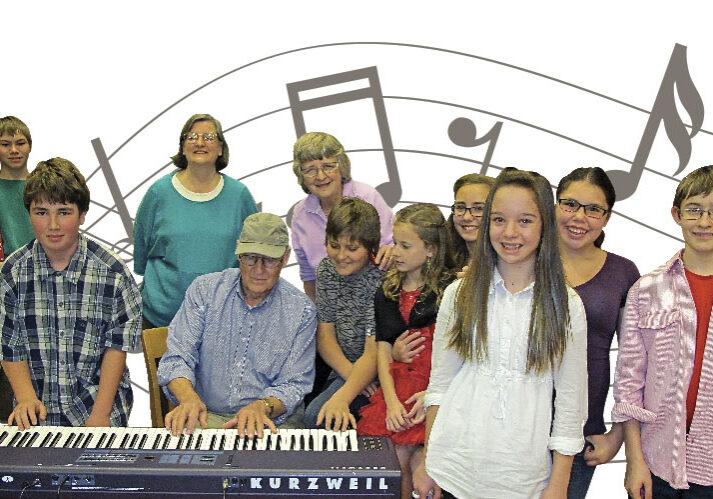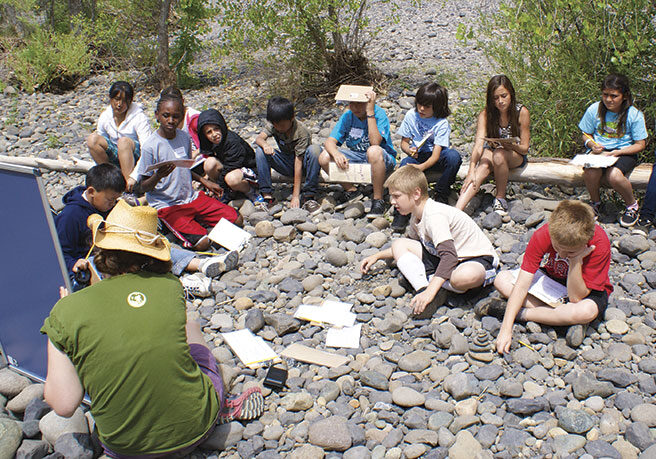
Volunteers are vital to the success of BWR’s rescue and conservation work and communicating the importance of preserving our region’s wildlife. Photo by P. Newman.
We are lucky to live in a community that loves animals of all types. In addition to the love and care we have for our pets, North State residents also care about wildlife like squirrels, owls, opossums and songbirds. We know to take our beloved pet to the vet when it becomes injured or ill, but what do we do when we encounter an injured, apparently ill or abandoned wild animal or bird?
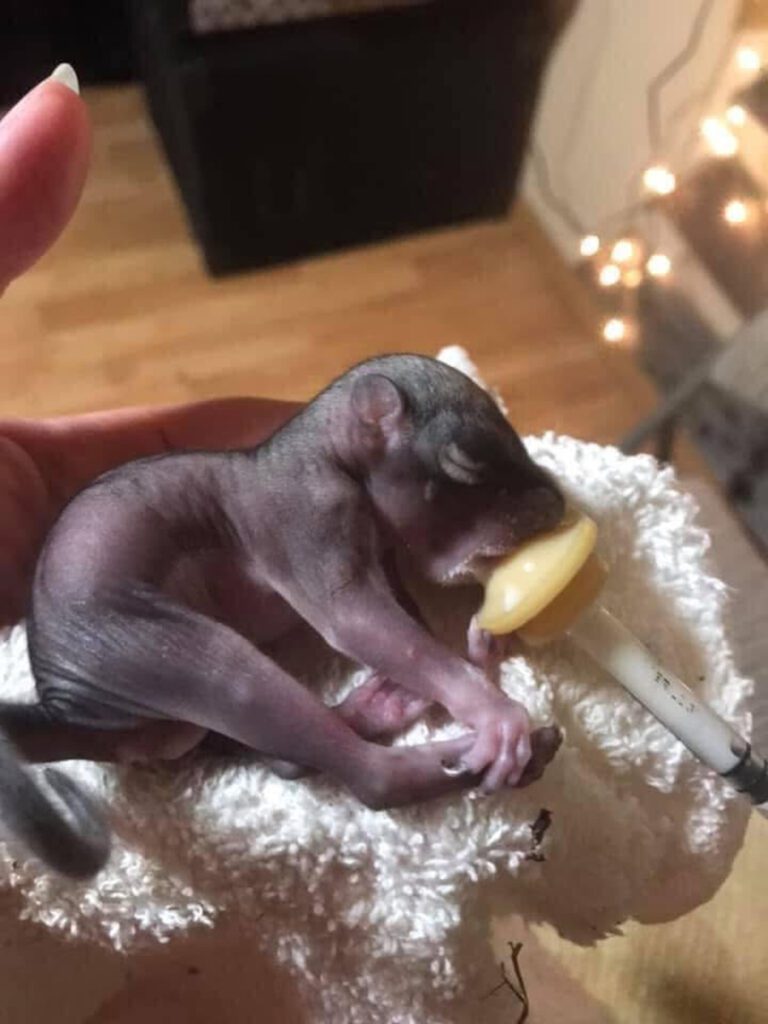
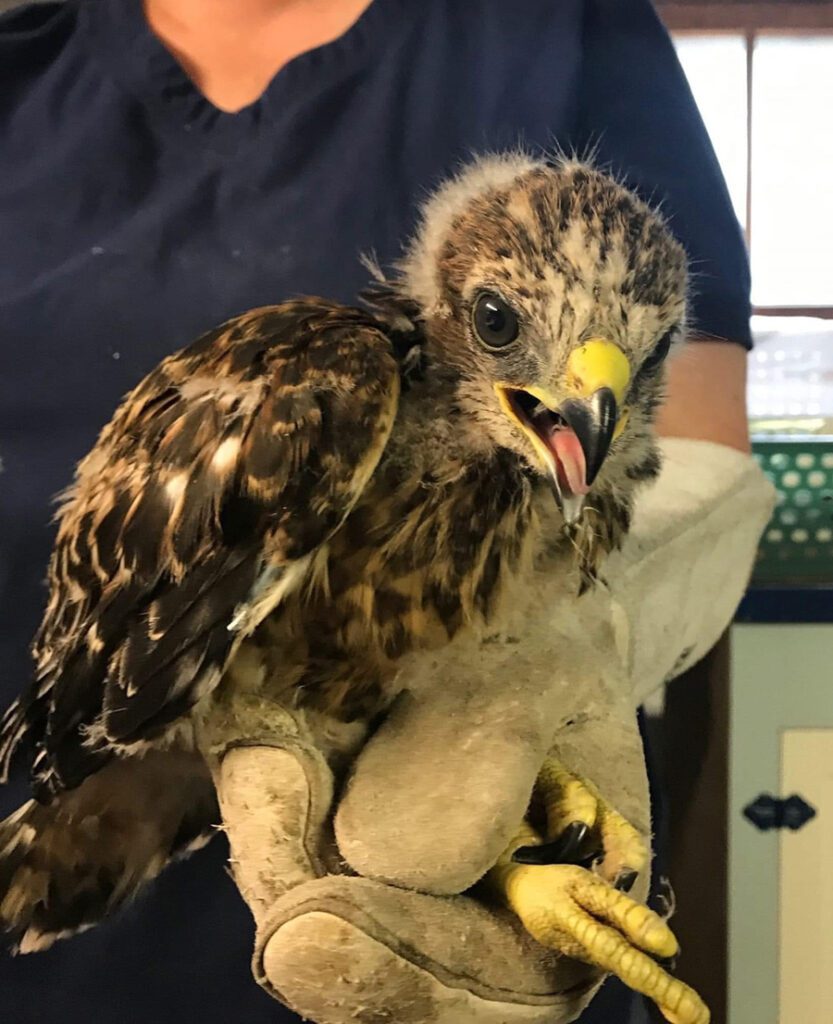
Bidwell Wildlife Rehabilitation (BWR) in Butte County, a volunteer-run organization, has been dedicated to rehabilitating orphaned and injured small mammals, raptors, reptiles and more in the Butte, Colusa and Glenn Counties since 1973. If someone finds a baby squirrel that has fallen from a tree or a red-tailed hawk that’s unable to fly, BWR can step in and help. BWR volunteers spend hours training in how to help all species of wildlife in our area.
 How to Seek Help for a Wild Animal
 How to Seek Help for a Wild Animal
Community members who find wildlife in need of help can contact BWR via an online intake form at bidwellwildliferehab.org, and an intake volunteer will contact the finder. In short order, the animal in need of help will be taken to a trained BWR volunteer who will raise, feed, care for and medicate the animal until it is able to be released. BWR’s goal is always to rerelease the animal – not to raise it as a pet or to be kept in captivity. They want wildlife to remain wild!
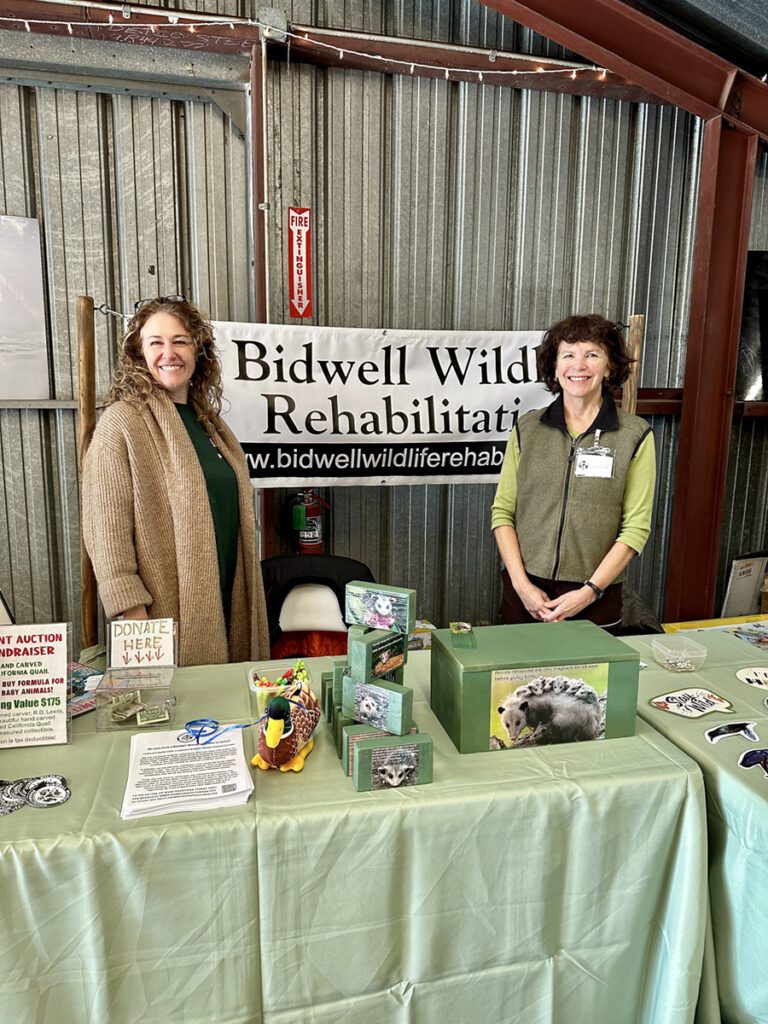
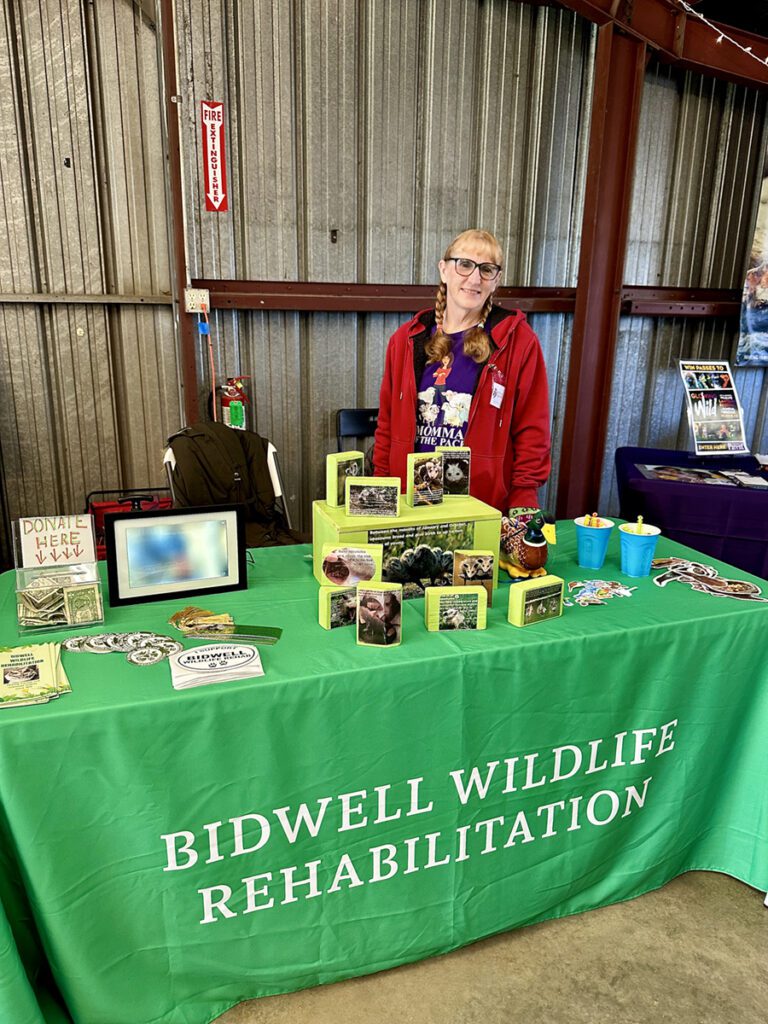
BWR board member Crystal Jaeger (left), recently Hometown Hero in the ER for her work with hawks and other raptors, joins board member Laurie Bradshaw in the BWR booth at this year’s Annual Snow Goose Festival to spread the word about BWR’s essential work. Photo by Pamela Newman.
Not All “Lone” Baby Animals are Abandoned
BWR rehabilitates many different species and each has its own special requirements. During baby season (February through September), BWR volunteers work especially hard, taking in abandoned baby animals and fielding questions from concerned North State residents. Public understanding of some wildlife habits can go a long way to help with the volunteers’ workload. For instance, not all fawns found without their mothers nearby are abandoned. Mama deer start having their babies around May of each year and will have one to three babies at a time. Sometimes the mama deer will leave her babies alone for hours at a time. Fawns are masters of camouflage and their mamas are good at leaving them in locations where they are safe from predators. Additionally, fawns have almost no smell when they are babies, so predators have a very hard time locating them.
Each year, well-meaning humans taking a hike will find fawns on their own and be worried the fawn has been abandoned and concerned it may need help from humans. The answer almost always is no. If you find a fawn or two by themselves, take a few moments to observe. Is the fawn crying out for help? Is it covered in ants or insects? Does it look thin or unhealthy? If the answer to these questions is no, then that fawn is doing fine and does not need intervention from humans. If the answer to any of these questions is yes, then it’s time to contact BWR to help.
Another group of babies that we will start to see soon are fledglings. Fledglings are teenage birds – not quite babies anymore, but also not quite adults. Mama birds start to encourage fledglings to leave the nest once they are almost fully feathered and their encouragement consists of pushing the fledglings out of the nest. With this encouragement, and under the supervision of their bird parents, fledglings learn to fly and become independent in the world. Like most fawns, fledglings are doing fine on their own and don’t need any help from humans.
For more information about what BWR does and how best to help wildlife, visit bidwellwildliferehab.org.
Posted in: Environment

Comment Policy: All viewpoints are welcome, but comments should remain relevant. Personal attacks, profanity, and aggressive behavior are not allowed. No spam, advertising, or promoting of products/services. Please, only use your real name and limit the amount of links submitted in your comment.
You Might Also Like...
16 Smart STEM Toys to Boost Brain Power
STEM Toys Can Boost Knowledge, Understanding, and Interest It is more crucial than ever today that children develop a keen interest in science, technology, engineering, and mathematics, commonly referred to […]
Solar Powered Clothes Dryer
Solar Powered Clothes Dryer Old fashioned and quaint or good green common sense? Air drying your laundry outside in the spring, summer and fall is one of the more […]
Solar Thermal Water Heating: Efficient and Green
Solar thermal is considered a renewable and green resource for hot water heating. A solar water heating system captures the warmth of the sun, transfers that heat to water, and […]
Heating Bills Leaving You Cold? The Benefits of Mini-Split, Heat Pumps.
Most people have heard of heat pump technology. More and more these days, heat pumps are providing both heating and cooling for homes and businesses. Traditionally in the U.S., heat […]