Virginia Phelps – environmentalist, with contributions by environmentalist Ellen Sweeney, retired biochemist Geneva M. Omann, Ph.D. and plastic pollution artist Debra Curtis.
Plastic is everywhere in modern life. It helps package our food, deliver products and provide countless conveniences. Yet the widespread use of plastic has created a growing environmental challenge that affects every community and every person – including our children – here in Northern California.
The Real Problem is Microplastics
When people think of plastic pollution, they often picture bottles and bags floating in the ocean. While litter is certainly part of the problem, much of today’s plastic pollution is far less visible. Over time, plastic products break down into tiny particles called microplastics. These particles are carried by wind and water into rivers, lakes, oceans, soil, wildlife and even the food and water we consume.
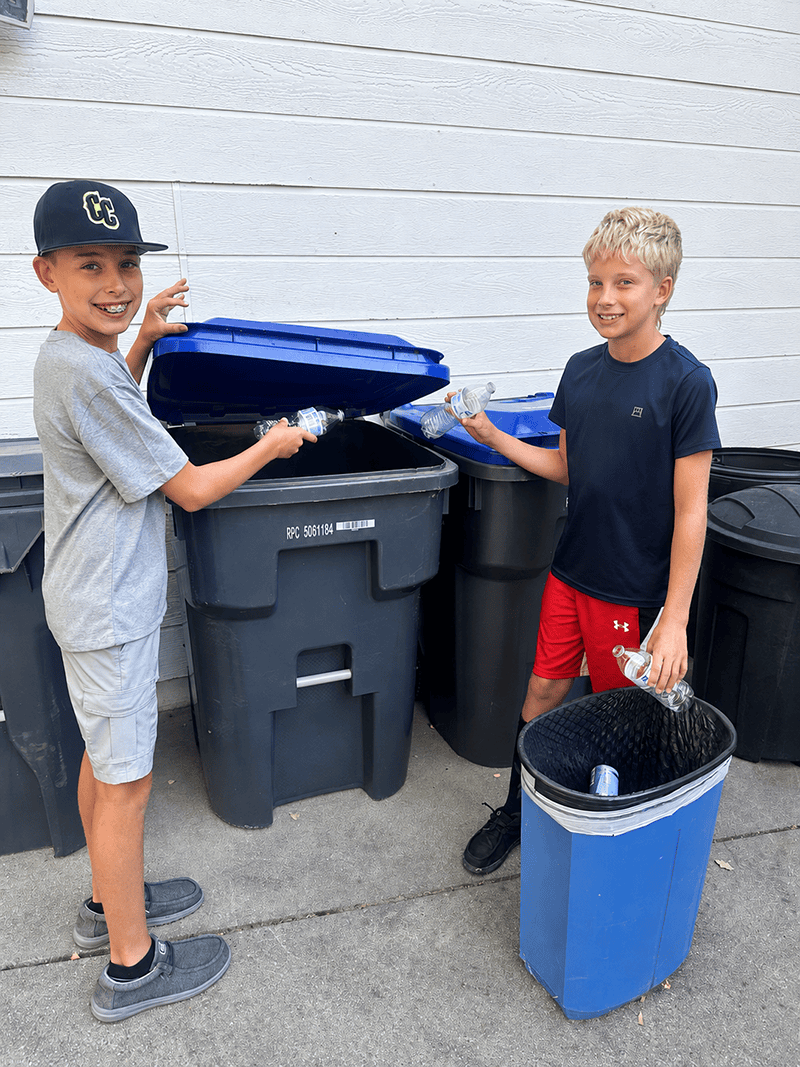
Brothers Wyatt, 11; and Logan, 10, Niewinski of Red Bluff understand recycling plastic containers and keeping microplastics from entering the environment is essential to the health of all living beings on the planet. Photo by Jenny Jones.
Many people also assume that placing plastic in a recycling bin ensures it will be recycled. Unfortunately, that is often not the case. Due to limited recycling markets and processing challenges, much of the plastic placed in recycling bins ultimately ends up in landfills. While recycling remains an important tool, it cannot solve the problem alone. Reducing unnecessary plastic use and increasing public awareness are essential parts of the solution.
The issue is not only environmental – it is also personal. Scientists have found microplastics in human blood, lungs, placentas and other tissues throughout the body. Researchers are still working to understand the full health implications of these discoveries, but the findings make it clear that plastic pollution is no longer something happening “somewhere else.” It is becoming part of our everyday lives.
Becoming Part of the Plastic Pollution Solution
The Plastic Awareness Coalition (PAC) is dedicated to informing Shasta County residents about the impacts of plastic pollution while providing students with creative and engaging opportunities to become part of the solution. While scientific research helps us understand the scope of plastic pollution, facts and statistics alone do not always inspire action.
The Plastic Awareness Coalition believes that art has a unique power to capture attention, spark conversation and help people see environmental issues in new ways. By combining science with creativity, students can become powerful advocates for positive change.
The Plastic Awareness Coalition’s primary educational efforts center around two student contests designed to raise awareness about plastic pollution while encouraging creativity and problem-solving. Students are invited to participate in a Plastic Pollution Poster Contest, using art and creativity to communicate important messages about plastic pollution and environmental stewardship. Students can also take part in the Plastic Pollution Sculpture Contest, transforming discarded plastic materials into imaginative works of art that inspire reflection and conversation.
These contests combine science, environmental literacy, artistic expression and community engagement. They encourage students to research environmental issues, think critically about solutions and share their learning with others. For high school students seeking meaningful Senior Project opportunities, the sculpture contest can also provide a unique way to combine environmental advocacy, research, creativity and community service.
By empowering young people to learn about plastic pollution and communicate its impacts through art, PAC hopes to inspire the next generation of environmental leaders and problem-solvers.
To learn more about the Plastic Awareness Coalition and upcoming student contests, visit plasticawarenesscoalition.com.
Posted in: Planet Support

Comment Policy: All viewpoints are welcome, but comments should remain relevant. Personal attacks, profanity, and aggressive behavior are not allowed. No spam, advertising, or promoting of products/services. Please, only use your real name and limit the amount of links submitted in your comment.
You Might Also Like...

From Tiny Homes to Cabin Kits: Local Innovative Housing Solutions for Eco-Conscious Parents
As the world becomes increasingly aware of the need for sustainable living, innovative housing solutions can align with eco-conscious values. Alternative housing such as tiny homes and cabin kits are […]
It’s Time to Talk Trash
We’ve all disposed of food scraps at some point, and if we bin them, we don’t usually think about what happens next. Here in California, over half of our trash […]
Spotlight on Karuk Tribe: Habitat Restoration on the Klamath River
The removal of four dams from the Klamath River has opened hundreds of miles of habitat for fish in California and Oregon. Already, salmon and steelhead have found their way […]
In the Zone with Green Loan Support
Reduce, reuse and recycle are words most of us have heard since childhood. But for GreenLoan Support in Tehama County, it’s not just talk. GreenLoan Support means to make this […]