By Anne-Marie Hosler, Founder, Major’s Place
There’s something undeniably magical about a horse. Their steady gaze, quiet strength and gentle presence have calmed anxious hearts and carried people through emotional storms for centuries.
The connection between humans and horses is both ancient and profound. Horses, as prey animals, are deeply attuned to their environment and to the emotional states of those around them. This sensitivity allows them to respond in real time to human body language, tone of voice and nonverbal cues—often reflecting feelings that may be difficult for a person to express. Through this intuitive feedback, horses can help individuals develop greater self-awareness, emotional regulation and trust. It is this unique, responsive relationship—built on mutual respect rather than spoken language—that forms the foundation of Equine-Assisted Therapy. By engaging with horses in structured, therapeutic settings, individuals are offered a powerful and often transformative path toward healing and personal growth.
Therapeutic models for equine-assisted healing and learning
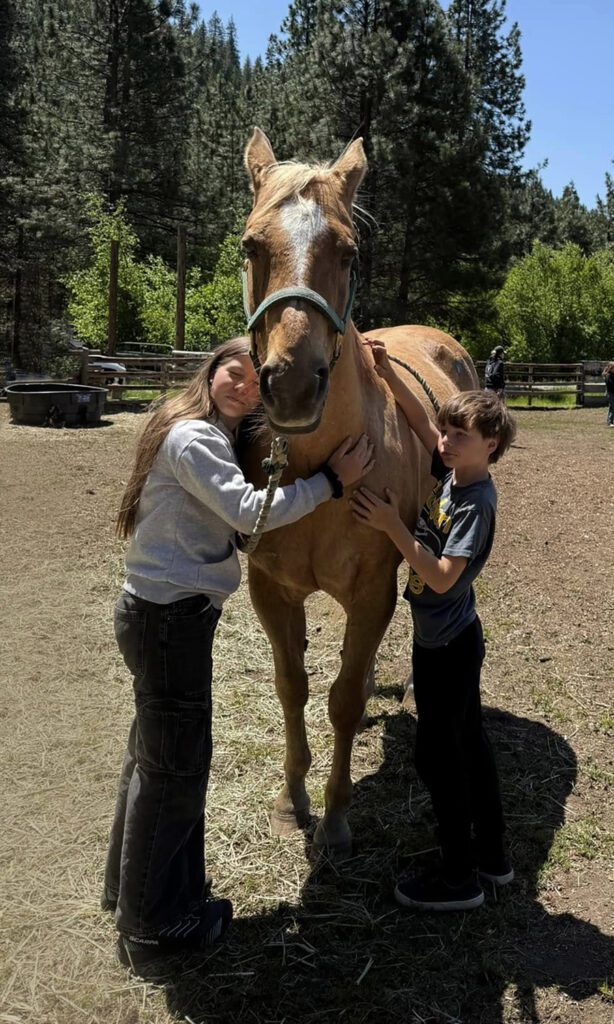
Equine-Assisted Therapy (EAT) and Equine-Assisted Learning (EAL) are therapeutic horsemanship models designed to support children, families, first responders and veterans. At Major’s Place, we don’t ride our horses. Instead, we work with them on the ground, building trust and connection through mutual respect. It’s remarkable what begins to shift when someone sees a thousand-pound animal listening to them—truly listening—without judgment or expectation.
But why is this therapeutic? According the Eagala philosophy, non-riding interactions create a more open and honest space for clients and provides the opportunity for deep self-reflection, guided by the intuition of the horse and the expertise of a trained therapist.
The science and spirit of Equine Therapy
Researchers are increasingly interested in quantifying what we witness every day: that equine-assisted therapy makes a profound impact. While we see it firsthand, scientific studies now support the benefits we observe—especially for those struggling with anxiety, PTSD, depression and neurodivergence.
For example, a 2022 study on veterans and first responders found that participation in an EAT program significantly reduced emotional symptoms of PTSD (Rosing, 2022). These programs offer a non-threatening alternative to traditional indoor or talk therapy, which can often feel stigmatizing or inaccessible.
Equine therapy also enhances mindfulness. A 2015 study found that participants showed marked improvement in mindfulness and reduced anxiety following EAT sessions (Vernon, 2015). Likewise, a 2021 neuroimaging study revealed measurable brain changes in people with PTSD after just eight weeks of EAT—particularly in areas associated with reward and motivation. This suggests equine therapy may help strengthen emotional connection and reduce symptoms by enhancing the brain’s reward system.
These effects are not limited to adults. A 2018 study on equine-assisted therapy for children with autism spectrum disorder (referred to here as neurodivergence) found parents reporting significant psychosocial benefits. Improvements included greater emotional well-being, better self-regulation and enhanced social functioning across different settings (Tan, 2018). The nonjudgmental presence of the horses—combined with a person-centered, non-directive approach from facilitators—fostered strong therapeutic alliances and created safe, accepting environments, often in contrast to more rigid or clinical interventions.
The quiet power of horses to transform lives
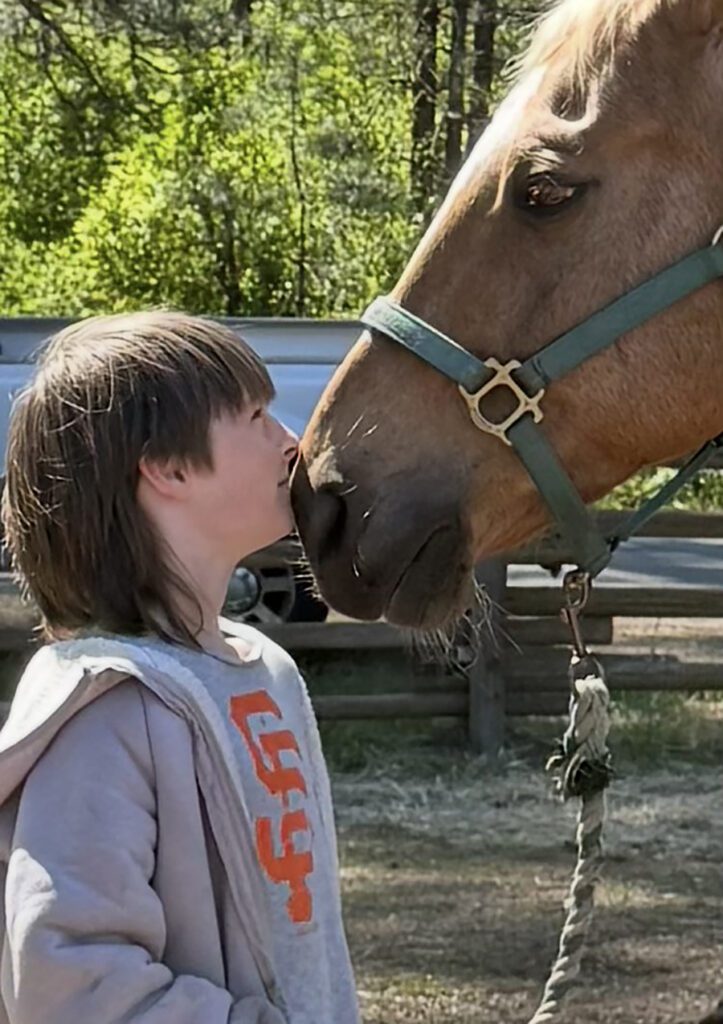
While science is catching up, at the core of it all is something more instinctual—the heart of the horse. Horses have large hearts and electromagnetic fields, and studies by the HearttMath Institute suggest they’re naturally adept at heart coherence. When humans interact with horses, their heart rhythms can synchronize, creating a coherent physiological state. This synchronization is associated with reduced stress, improved emotional regulation and increased feelings of well-being (Dampsey, 2017).
At Major’s Place, horses are not tools—they’re partners. Each horse brings a unique story and contributes to the healing journey. Major, the horse who inspired the founding of Major’s Place, came into my life not as a show horse, but as a guide. He taught me how to be present, how to listen with more than just ears, and how to heal by simply being together. That spirit is woven into every aspect of our work.
As we move into the cooler months, we’re reminded of the importance of warmth, connection and safe spaces. For many families in Siskiyou County, Major’s Place has become just that—a refuge where healing happens through the quiet power of connection between horse and human.
If you’re interested in learning more or getting involved, please visit majorsplace.org. Or to find a certified Equine-Assisted Therapy center near you visit eagala.org.
Writer Bio:
Anne-Marie’s love for horses began early in life, drawn to the profound healing connection they offer. As a teenager, she served as a youth wrangler at Ride with Pride in Grapevine, Texas, and later as a collegiate wrangler at Pine Cove in Tyler, Texas.
References:
Dampsey, E. (2017). The effect of equine-assisted psychotherapy on emotion regulation: Self-efficacy and self-awareness as potential mediators (Doctoral dissertation, Fielding Graduate University). heartmath.org/research/research-library/dissertations/effect-equine-assisted-psychotherapy-emotion-regulation-self-efficacy-self-awareness-potential-mediators/
Earles, J. L., Vernon, L. L., & Yetz, J. P. (2015). Equine-Assisted Therapy for Anxiety and Posttraumatic Stress Symptoms. Journal of Traumatic Stress, 28(2), 149–152. doi-org.csu.idm.oclc.org/10.1002/jts.21990
Equine Assisted Growth and Learning Association. (n.d.). Boots‑on‑the‑ground model. eagala.org/about-us/boots-on-the-ground-model/
Rosing, T., Malka, M., Brafman, D., & Fisher, P. W. (2022). A qualitative study of equine‐assisted therapy for Israeli military and police veterans with PTSD—impact on self‐regulation, bonding and hope. Health & Social Care in the Community, 30(6), e5074–e5082. doi-org.csu.idm.oclc.org/10.1111/hsc.13922
Zhu, X., Suarez-Jimenez, B., Zilcha-Mano, S., Lazarov, A., Arnon, S., Lowell, A. L., Bergman, M., Ryba, M., Hamilton, A. J., Hamilton, J. F., Turner, J. B., Markowitz, J. C., Fisher, P. W., & Neria, Y. (2021). Neural changes following equine-assisted therapy for posttraumatic stress disorder: A longitudinal multimodal imaging study. Human brain mapping, 42(6), 1930–1939. doi.org/10.1002/hbm.25360
Vanessa Xue-Ling Tan, & Janette, G. S. (2018). Parent Perceptions of Psychosocial Outcomes of Equine-Assisted Interventions for Children with Autism Spectrum Disorder. Journal of Autism and Developmental Disorders, 48(3), 759-769. doi-org.csu.idm.oclc.org/10.1007/s10803-017-3399-3
Posted in: Animals

Comment Policy: All viewpoints are welcome, but comments should remain relevant. Personal attacks, profanity, and aggressive behavior are not allowed. No spam, advertising, or promoting of products/services. Please, only use your real name and limit the amount of links submitted in your comment.
You Might Also Like...
What To Know About Keeping a Pet Bird
Thinking of getting that cute little pair of parakeets for Christmas? Yearning to have a pet parrot that greets you when you get home? According to Born Free, a leading […]
Own A Pet? Green Up Your Habits!
You might already live a “greener” life by taking reusable shopping bags to the store, recycling newspapers and composting kitchen scraps. But what about your pets? According to Stephanie Feldstein, […]
A Friend for Life – Is a Dog right for your Family?
Wrigley is a Goldendoodle who was born in a puppy mill and sent to a pet store. A family came into the store just before the holidays to ooh and […]

Reading To Animals – A Fun Way To Help Children Improve Their Reading
Reading is a necessary skill for everyone, but sometimes children can feel overwhelmed with doing it and even more afraid of reading out loud. However, reading to animals can make […]