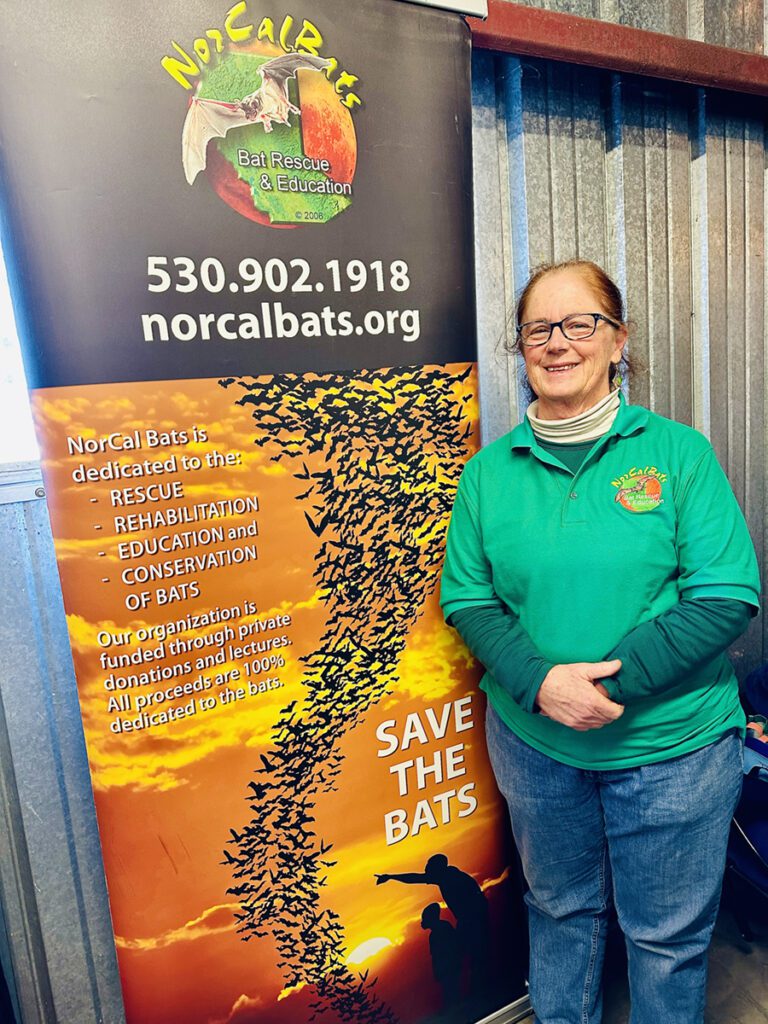
Bats are incredible creatures. They are the only mammals capable of powered flight. They’ve adapted to numerous niches and environments and are essential in keeping insect populations in balance. An environment without bats can lead to ecological disaster. Locally, NorCal Bats, headed by Corky Quirk, is working to protect the 17 different species of bats native to Northern California, rescue injured bats and spread the word about the vital role bats play in the health of our ecosystem.
 The origins of a bat-focused life
 The origins of a bat-focused life
Corky’s fascination with the natural world began in childhood, starting with family camping trips and summer camp experiences throughout her teen years. Later, after her adopted family of children reached school age, nature drew her back. A newly opened position for Environmental Education in Davis was the perfect fit. While Corky taught mostly about birds and wetland habitats, a visiting expert taught about bats and Corky fell in love with the winged creatures. This love-at-first-flight story led to volunteering for a bat rescue. When the rescue owner fell ill, Corky swooped in and saved the project, using her external connections to keep it afloat and breathe new life into it. Thus began NorCal Bats.
Rescuing Bats and California’s Environment
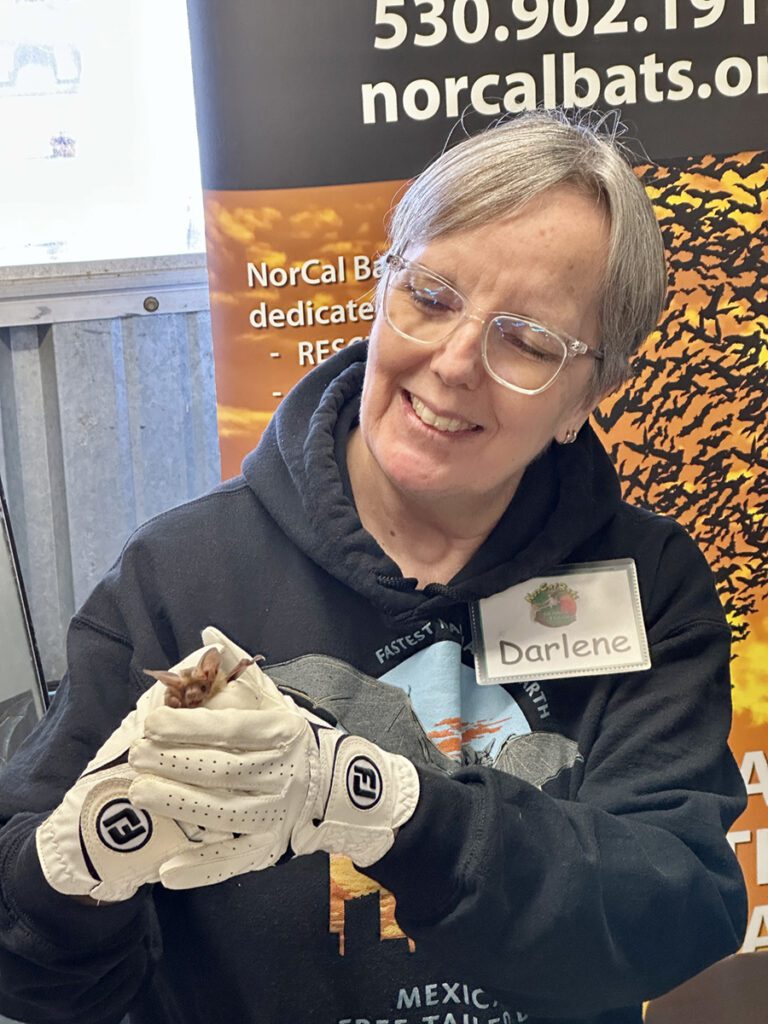
NorCal Bats provides bat education, resources and wildlife rescue specializing in bats. “We get somewhere around 200 a year,” Corky says. Of course that’s not a bunch of new flappy pets. “The goal with rescue is to help those animals recover and return to the wild. But sometimes, we have a bat with an injury we can’t repair.” If approved by the State, these non-releasable bats move to an exhibiting permit and become ambassadors for their species. These am-bat-sadors travel to schools and events to remove some of the stigma about bats and teach people what makes them vital to the ecosystem.
All the bats native to the United States are insectivorous. Having these bug-eaters around means fewer pesticides on food. “When the bats are lost,” Corky says, “there’s human health implications due to the increase in pesticides.”
What to Know if You Encounter a Bat
 What to Know if You Encounter a Bat
Since bats are just about everywhere, you might someday see one up close. If one is trapped in your house or looks sick or lethargic, it’s good to know what to do. “People often don’t understand what’s normal and what’s not,” Corky says. “Maybe they open their picnic umbrella after the winter and they go, ‘Oh. A bat fell out. Is there something wrong with it?’ That’s probably a healthy bat.
Or people worry about a single bat roosting over their front door, a crevice or on the stucco outside. Unless it’s below head-height, it’s probably a perfectly healthy bat.” But there are clues when something isn’t right. “A bat on the ground or on a wall below head-height – usually there’s something wrong. It could be injured. It might be a first-year animal, isn’t good at hunting and it’s succumbing to nature. It could be sick.”
Corky’s Tips for Wild Bat Encounters
 Corky’s Tips for Wild Bat Encounters
What do you do if you see a bat in rough shape? Corky suggests these steps:
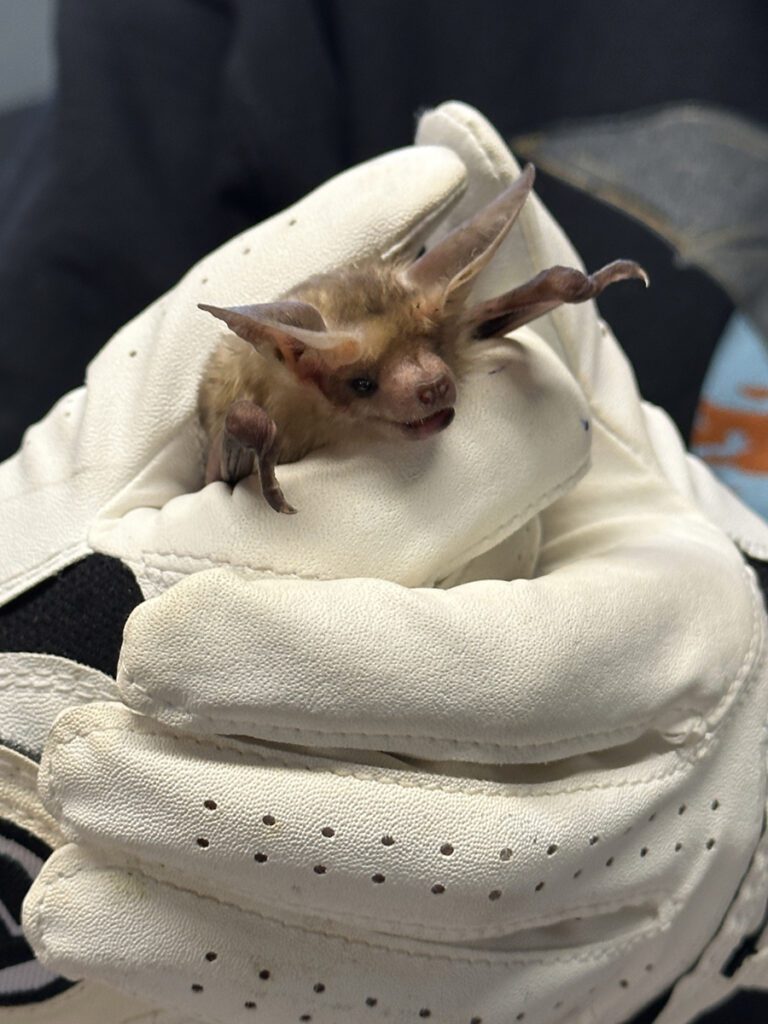
1) “Don’t handle it bare-skinned. A sick bat is highly unlikely to attack. But if you handle it, it may bite.” (If one bites, it must be euthanized to check for rabies.) “Wear leather gloves good enough for rose thorns.”
2) “You can use a scoop, a shoebox (turn the box sideways and use the lid to scoop the bat inside) or empty takeout containers,” (breathable, of course). “An empty coffee cup with a lid also works. Make sure it’s sealed. Bats aren’t strong, but they’re little, so they can get out of the thumb holes of a shoebox, even if they’re injured.”
3) Once the bat is caught, call your local wildlife rescue. “Every county is going to have a rescue. Though not every county does bat rescues – they can refer you to a bat rescue.”
4) If you call a rescue, Corky says, “it’s best if you text a photo.” That way, they can evaluate for immediate needs before getting your beleaguered buddy in their helping hands.
5) If you find one in your home, turn the inside lights low, the outside lights up and open a door or window. “People think bats are afraid of the light, but they’re not. If you think about a bat living in a cave, it leaves by going into the light.” If you try to chase or scare the bat out, you’ll only terrify and confuse it.
Corky and NorCal Bats are ready to help when someone encounters a bat. “A lot of people call me and I’m happy to walk them through what’s normal and what’s not.” And since bats have only one baby per year, populations don’t recover quickly from hardship (if they recover at all). That’s why it’s important to reach out if one looks like it needs help. Visit norcalbats.org or 530-902-1918 for more information or to report a sick bat.
Posted in: Animals

Comment Policy: All viewpoints are welcome, but comments should remain relevant. Personal attacks, profanity, and aggressive behavior are not allowed. No spam, advertising, or promoting of products/services. Please, only use your real name and limit the amount of links submitted in your comment.
You Might Also Like...

A Friend for Life – Is a Dog right for your Family?
Wrigley is a Goldendoodle who was born in a puppy mill and sent to a pet store. A family came into the store just before the holidays to ooh and […]

The Healing Power of Horses
By Anne-Marie Hosler, Founder, Major’s Place There’s something undeniably magical about a horse. Their steady gaze, quiet strength and gentle presence have calmed anxious hearts and carried people through emotional […]
Is Your Family Pet a “Canine Good Companion?”
Anna Hemstalk, of Hemstalk Canine Companions, is an inspirational voice in her chosen field. She is an American Kennel Club evaluator and trainer, committed to the positive influence she knows […]
Teaching Children Responsible Pet Ownership
When I think about things that make my heart smile, two things often come to mind: puppies and children. As many families will attest, adding a pet to your home […]