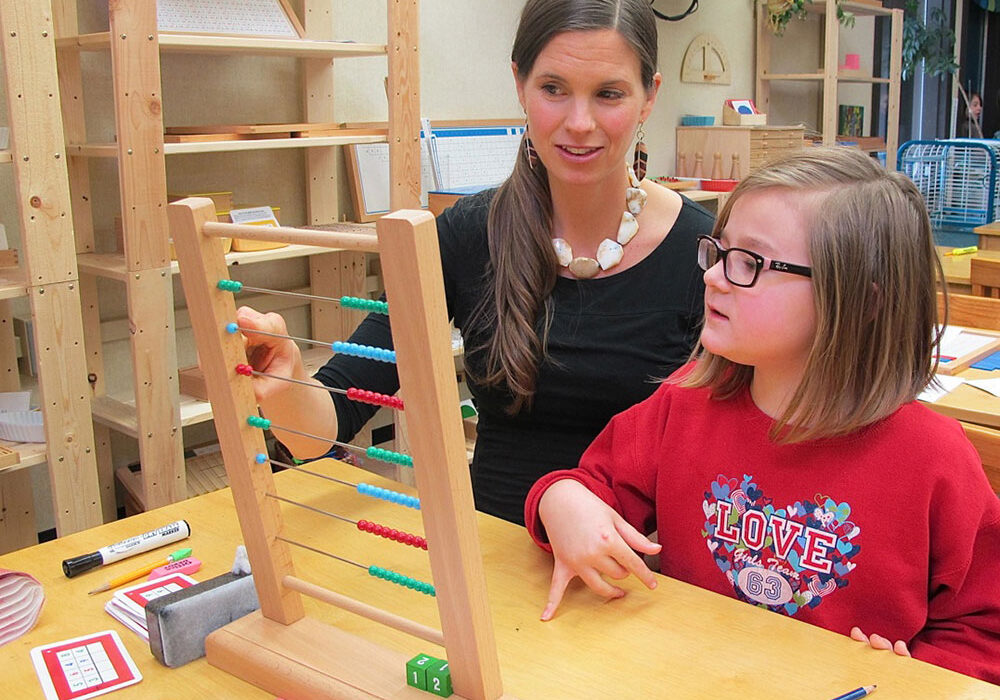
The first thing one notices when arriving at Hearthstone School in Oroville is that the garden out back is not what you’d expect. There are no tidy raised beds with tomato cages and a hand-lettered sign. What Matthew Trumm, Hearthstone School Garden Coordinator, has built over the past 10 years is something closer to an ecosystem. The garden is a food forest, a water harvesting system, a nursery, a working compost operation and a living classroom that wraps itself around every subject in the school day. At the beginning of his day, Trumm carries his slim, rugged build under canvas and denim clothing that is remarkably clean. His baseball cap seems made especially for him, with a patch that reads “Big Trees.” His nickname at the school is “Mr. Tree.”
“You can teach every subject in the garden,” Trumm says. “Math, science, writing, design. It’s all here.”
 Building a Permaculture Education Program
 Building a Permaculture Education Program
Hearthstone School has been an integral program through the Butte County Office of Education since the 1980s. It began as Butte County Home Study and in the mid 1900s developed its charter. The school, tucked away in the northwest corner of Oroville near Thermalito Bay, serves approximately 220 students in grades TK-12 throughout Butte County and all contiguous counties.
Trumm came to Hearthstone in 2016 to speak at a composting workshop and he stayed. A certified permaculture educator through the Australian Permaculture Institute and a licensed landscape contractor, he had spent years teaching sustainable landscape design to adults. Something clicked for him when he first arrived on campus. “I realized that this is it,” he says. “Everything I’d been trying to do with adults, I could do here with kids and it actually sticks.”
What he built, quietly and incrementally, is a permaculture education program. Younger students in TK through fifth grade experience the garden as a space for pure exploration. He calls this “The Cornerstone School Garden Program.” There’s a plan, but if the kids notice lizards that’s the day’s lesson. If there are worms in the compost, the class goes deep on worms. “It’s very fluid,” Trumm says. “I let them guide me. It’s all about fun and I don’t care about it being perfect.”
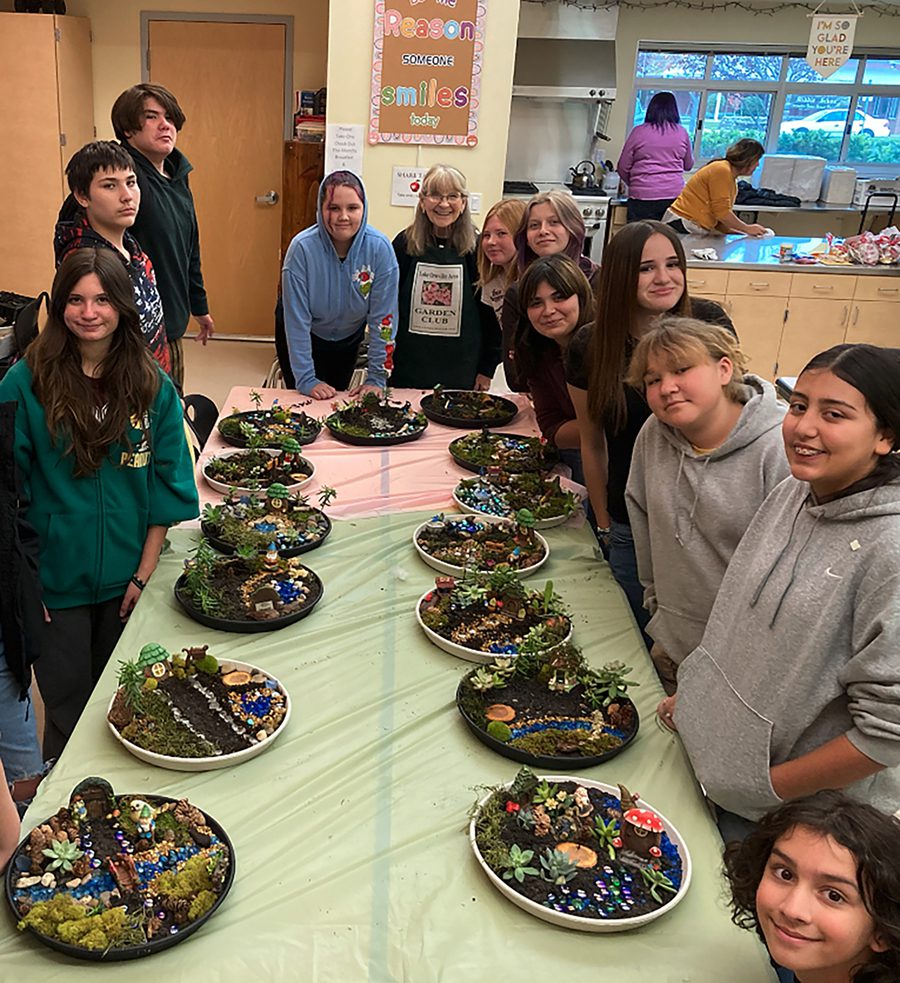
As students move into the upper grades, the curriculum deepens. They learn the ethics and principles of permaculture design, including earth care, people care and future care, alongside the practical skills of seed starting, composting, water management and propagation. By sixth, seventh and eighth grade, students join the Junior Garden Club, where the dynamic shifts. At that point, they’re the ones making decisions.
Students Learn Regenerative Economics
Last year, the club’s sales of herb blends, plant starts, baked goods and homemade products fully covered the program’s supply costs. The goal is for the program to be entirely self-sustaining; what Trumm calls “regenerative economics” in action.
The garden itself reflects a philosophy of working with nature rather than against it. Where most school gardens focus on summer vegetables, only to struggle when teachers and volunteers scatter for the hottest months, Trumm shifted the emphasis to winter greens, perennial fruit trees and varieties that ripen while school is in session.
Lessons in Water Conservation
 Lessons in Water Conservation
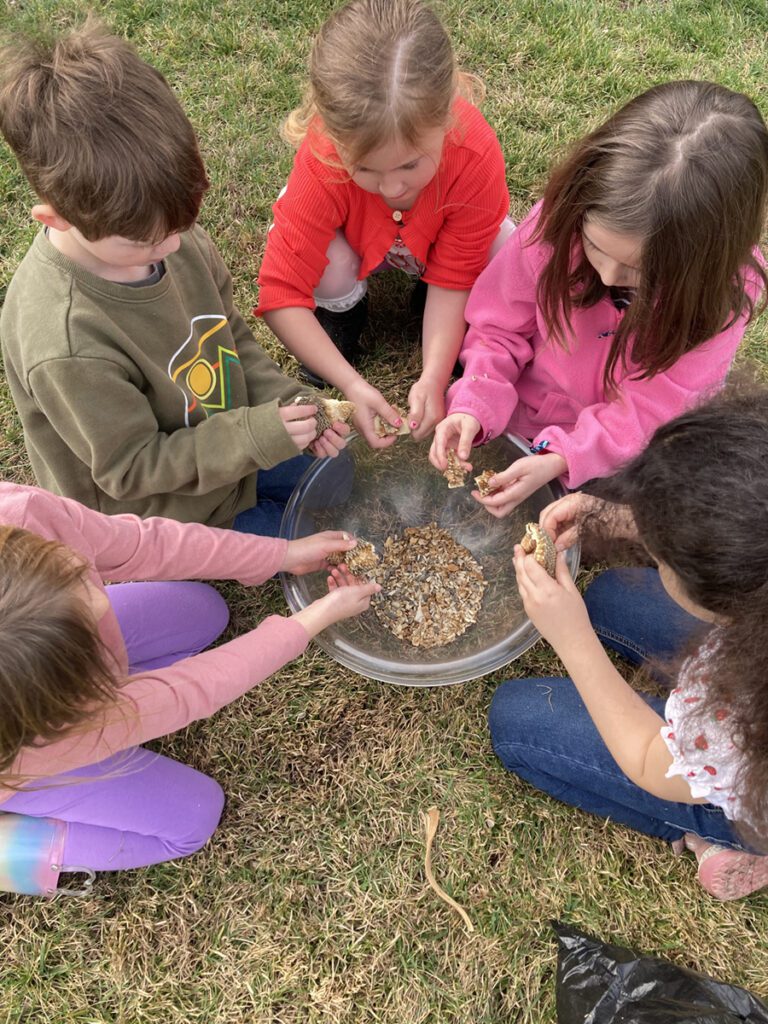
The water system is equally thoughtful. A $500,000 grant through Chico State University and the State Water Board funded what Trumm describes as the largest rainwater catchment and stormwater infiltration system of its kind in California. Three large tanks collect rainfall, pump water to a tank at the school’s highest point and release it through a network of bioswales, check dams and permeable pavement. This slows the water’s journey through the landscape, feeding trees and soil along the way. On rainy days, students can pull up check dams and watch the water move. “Kids love water,” Trumm says, laughing. “And this is a real illustration of how we can rehydrate a watershed.”
Preparing Students for a Career in Regenerative Industry
This year, Trumm launched the RIP Program — Regenerative Industry Pathway — connecting high school students with real work experience in landscaping, farming, nursery management and related trades. Students earn academic credits from work experience. Currently, they are helping in the school garden, but soon the plan is to build out more school garden programs and in doing so, accompany regenerative contractors during the installs and develop pathways toward paid positions. One of the first hires from his own landscape business was a former garden student. “That was the goal,” he says. “And it worked.”
Hearthstone Students Give Back to the Community
In the spring, the Junior Garden Club partnered with another student group to distribute more than $6,000 worth of donated fruit trees to fire survivors from Paradise, Concow, Berry Creek and surrounding communities. They hosted dozens of survivors at the school, served a meal from the garden and gave tours of everything they’d built. “We didn’t realize how much people would appreciate it,” Trumm says. “It was great to have the students see how impactful giving back can be.”
Hearthstone principal Kelly Haight says of the garden project, “For nine years, students have been benefiting. Some students who finish up with eighth grade want to come back for high school, asking for more of Mr. Tree.”
Posted in: Education

Comment Policy: All viewpoints are welcome, but comments should remain relevant. Personal attacks, profanity, and aggressive behavior are not allowed. No spam, advertising, or promoting of products/services. Please, only use your real name and limit the amount of links submitted in your comment.
You Might Also Like...

Tips From A Seasoned Homeschooler
My kids and I genuinely enjoy our time together. We might spend our days reading classic poetry, or poring over books about art before going to the gallery, or sitting […]

Wild Things at Your Child’s School
A nonprofit animal rescue Your classmates may have been wild, but if you grew up in the North State, you probably made it through your entire academic career without so […]

Setting Ourselves Up For A Successful School Year
I’d love to pass along some advice, from a teacher’s perspective, so we can all set ourselves up for a successful school year. It might be online, it might be […]
Keeping the Arts Alive in Your Child’s School – How Some Schools are Beating the Budget Crisis
Research studies have shown that a strong school arts program increases a student’s self-esteem and creativity, and fosters a lifelong love of learning. But during tough economic times, it’s usually […]