Playground equipment has come a long way from the days of rusty metal structures with sharp edges. Playground surfaces have evolved, too, from sand and cement to wood chips and other materials, including rubber crumb-place surfaces. With so many surface choices, parents may wonder which is safest for children to play on. Wood chips seem a nontoxic solution but they are messy and become compact, not providing much cushion. Rubber crumb play surfaces provide good cushioning for falls, but are they chemically safe?
A new study from the California Office of Environmental Health Hazard Assessment (OEHHA), one of the strictest environmental agencies in the nation, has found that recycled tire crumb rubber, commonly used in playground surfacing and synthetic turf, poses no significant health risks for children during normal play. oehha.ca.gov/risk-assessment/report/release-final-report-synthetic-turf.
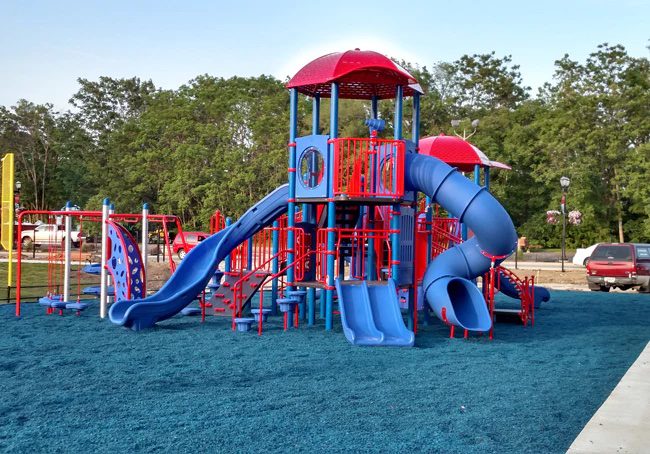
Rubber crumb play surfaces have been thoroughly tested by the California Department of Environmental Health Hazard Assessment and deemed to be of no significant health risks to children or adults.
Science-Backed Information on Rubber Crumb Play Surfaces
OEHHA conducted one of the most comprehensive evaluations of crumb rubber to date. Researchers assessed 35 synthetic turf fields across California that contained recycled tire crumb rubber, analyzing more than 100 different chemicals. The study also examined how children and adults could realistically come into contact with these materials through skin contact, breathing and accidental ingestion during everyday play.
Researchers found that potential risks related to cancer, reproductive health, child development and sensory irritation were negligible, including for young children. The findings provide strong scientific evidence that crumb rubber playground surfaces are safe for routine recreational use.
Rubber Playground Surfacing Provides Superior Protection Against Falls
Rubber playground surfacing is specifically engineered to absorb impact and cushion falls. Whether using rubber mulch or poured-in-place rubber systems, these surfaces are designed to reduce the force transferred to a child’s body and head during an accident.
Unlike grass or dirt, rubber surfaces maintain a flexible, shock-absorbing structure that helps soften landings. High-quality rubber mulch products can far exceed standards established by ASTM (a global industry standards organization with 125 years of experience developing and implementing safety standards) for impact attenuation. It provides a much higher level of protection than traditional loose-fill materials.
Rubber mulch also offers practical long-term advantages over wood mulch and other alternatives. It is less likely to compact, decompose or scatter outside play zones. It also maintains more consistent depth coverage, which is essential for preserving fall protection over time. In colder regions, rubber remains more resilient and does not freeze into a hard surface the way wood-based materials often can.
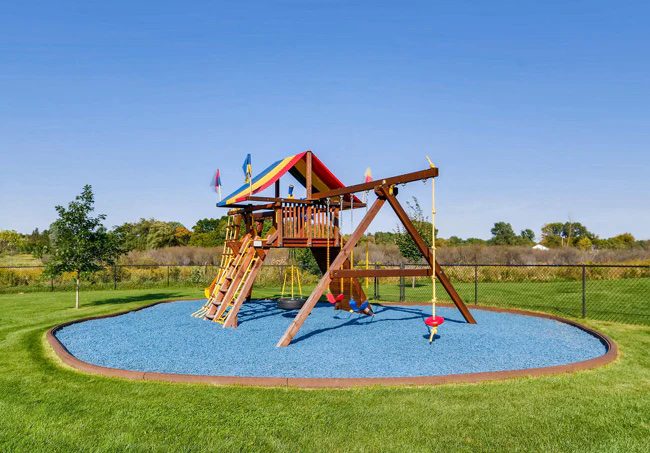
Rubber crumb play surface’s durable cushioning provide better protection from fall injuries than other traditional play surfaces.
Photos provided by Rubbercycle.
Additional Advantages of Rubber Playground Surfaces
Beyond their strong safety record, recycled rubber playground surfaces offer several practical benefits that make them a popular choice for schools, parks and communities. Rubber surfaces are slip-resistant, drain water quickly after rain and remain durable under heavy use. Compared with traditional loose-fill materials, rubber surfacing typically requires less maintenance while providing consistent cushioning throughout the playground.
Using recycled tires in playground surfacing also provides important environmental advantages. Each year, millions of scrap tires are diverted from landfills and illegal dumping sites by being transformed into products such as playground mulch, poured-in-place safety surfaces, synthetic turf and rubber-modified asphalt. Repurposing these materials supports a circular economy by reducing waste, lowering the overall environmental footprint of tire disposal and creating manufacturing jobs throughout the United States.
Choosing a safe place for children to play means looking at both health and injury prevention. Current scientific research shows that recycled crumb rubber playground surfaces do not pose significant health risks during normal use, while their impact-absorbing properties help reduce the risk of serious injuries from falls. Combined with their durability, low maintenance and environmental benefits, rubber playground surfaces can be a practical, well-supported choice to create safe, enjoyable play spaces.
Posted in: Safety

Comment Policy: All viewpoints are welcome, but comments should remain relevant. Personal attacks, profanity, and aggressive behavior are not allowed. No spam, advertising, or promoting of products/services. Please, only use your real name and limit the amount of links submitted in your comment.
You Might Also Like...

Digital Dangers Parents Should Watch Out For in the New School Year
Once upon a time, a public service announcement aired on the television, “It’s 10pm. Do you know where your children are?” as a reminder about public curfews for adolescents. More […]

Safety and Security in the North State
Thousands of dedicated law enforcement, fire and first responder personnel throughout the North State work hard every day to respond to emergencies and do their best to protect and serve […]

How to Prepare Your Family for a Weather Emergency
We are living in a time of record-breaking temperatures and extreme weather events causing havoc, such as floods, hurricanes and other storms, tornadoes and wildfires. Coming face to face with […]
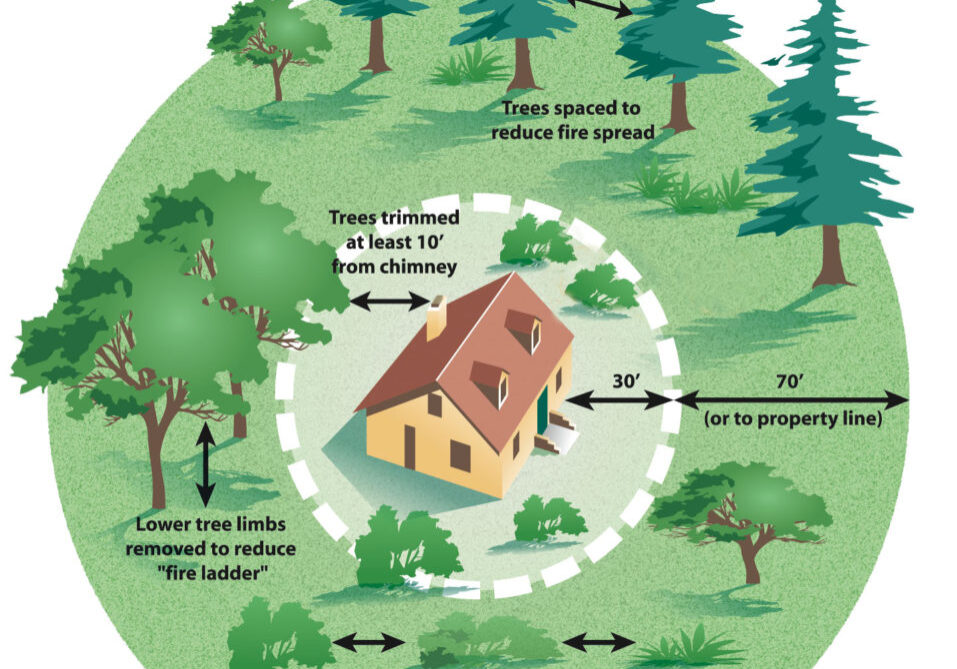
Before, During and After a Wildfire
Wildfire Actions What to do BEFORE a wildland fire: Create defensible space to separate your home from flammable vegetation and materials (minimum 100ft PRC 4291). Adhere to all local fire […]