A trip to the emergency room can be a stressful experience for anybody, let alone somebody with a disability or chronic health conditions. Caught in a whirlwind of overwhelming symptoms, expressing personal needs to facilitate a safe visit is often complicated and frustrating.
It’s not only the patients who experience these frustrations, but emergency room doctors do as well. The infrastructure of the emergency room environment can make it challenging to build rapport.
“The emergency room has a unique set of challenges,” says Dr. Ben Isakson, M.D., a Chico emergency room physician. “We don’t have much time with any one patient. We’re often pulled away in the middle of an encounter to deal with an emergency and we don’t get to see our patients on a repeat basis to develop rapport and a therapeutic relationship. This makes it especially hard to pause and take into account the broadly variable needs of each patient we meet. This is frustrating for the emergency room doctors, but probably much more frustrating for patients who might not be getting the direct and personalized care they deserve.” Recognizing an intricate system of complexities, Dr. Isakson suggests a simple but powerful solution.
Care Cards Help Assist with Communication Between Doctor and Patient
As a person with a disability, I discussed the emergency room experience with Dr. Isakson, from both his perspective as a provider and my perspective as a patient, with the goal of determining the most important facts, needs, desires, dos and don’ts that will facilitate the best possible experience in the emergency room.
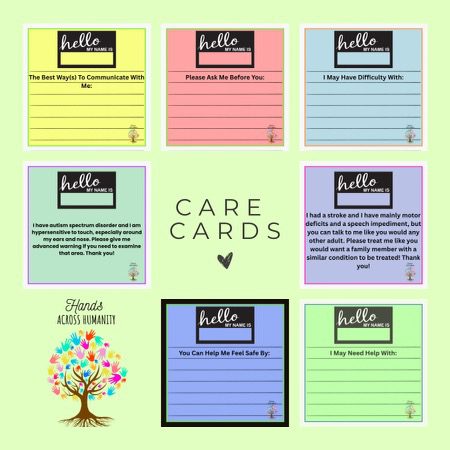
Through this process, we created 3×3 printable Care Cards that feature prompts intended to assist patients in communicating their needs to medical professionals and ultimately build a bridge to our collective humanity. Dr. Isakson knows it takes courage to explain again and again needs that aren’t always respected or well-received by the medical community. He tells his patients, “Thank you for showing up for yourself, anyway.”
I invite you to print the downloadable Care Card file at handsacrosshumanityfdn.home.blog/care-cards-2/ and cut the Care Cards according to your needs. We provide cards featuring open-ended questions for you to fill out and two Cards featuring examples from Dr. Isakson.
We hope Care Cards may be a resource for self-advocacy and will bolster positive outcomes in the emergency department for those of us with disabilities and chronic conditions, as well as those without. Care Cards applicability extends beyond the hospital, into our communities. Whether at work, play, therapy, school or any other social event, sharing a card can open a pathway not only for self-advocacy, but for community, teamwork and inclusion.
Posted in: Health & Nutrition

Comment Policy: All viewpoints are welcome, but comments should remain relevant. Personal attacks, profanity, and aggressive behavior are not allowed. No spam, advertising, or promoting of products/services. Please, only use your real name and limit the amount of links submitted in your comment.
You Might Also Like...

Helping Introverted & Highly Sensitive Kids Thrive
These days my teenage daughter cheerfully refers to herself as an ambivert, meaning a person who has both introvert and extrovert qualities. But this was not always the case. When […]
What If I Never Lose a Pound?
I stood there completely naked. I reached back and pulled the ponytail holder out of my hair. Nothing was going to impact this. I thought about taking off my wedding […]

Mastering Mealtime
At the end of a long and busy day, the last thing on your mind is cooking a healthy dinner for your family. The kids are hungry, the baby is […]

Building Relationship Resilience
Being married with kids in the modern age is the perfect recipe for the occasional — or constant — experience of chaos and feeling overwhelmed. The challenge starts with marriage. […]