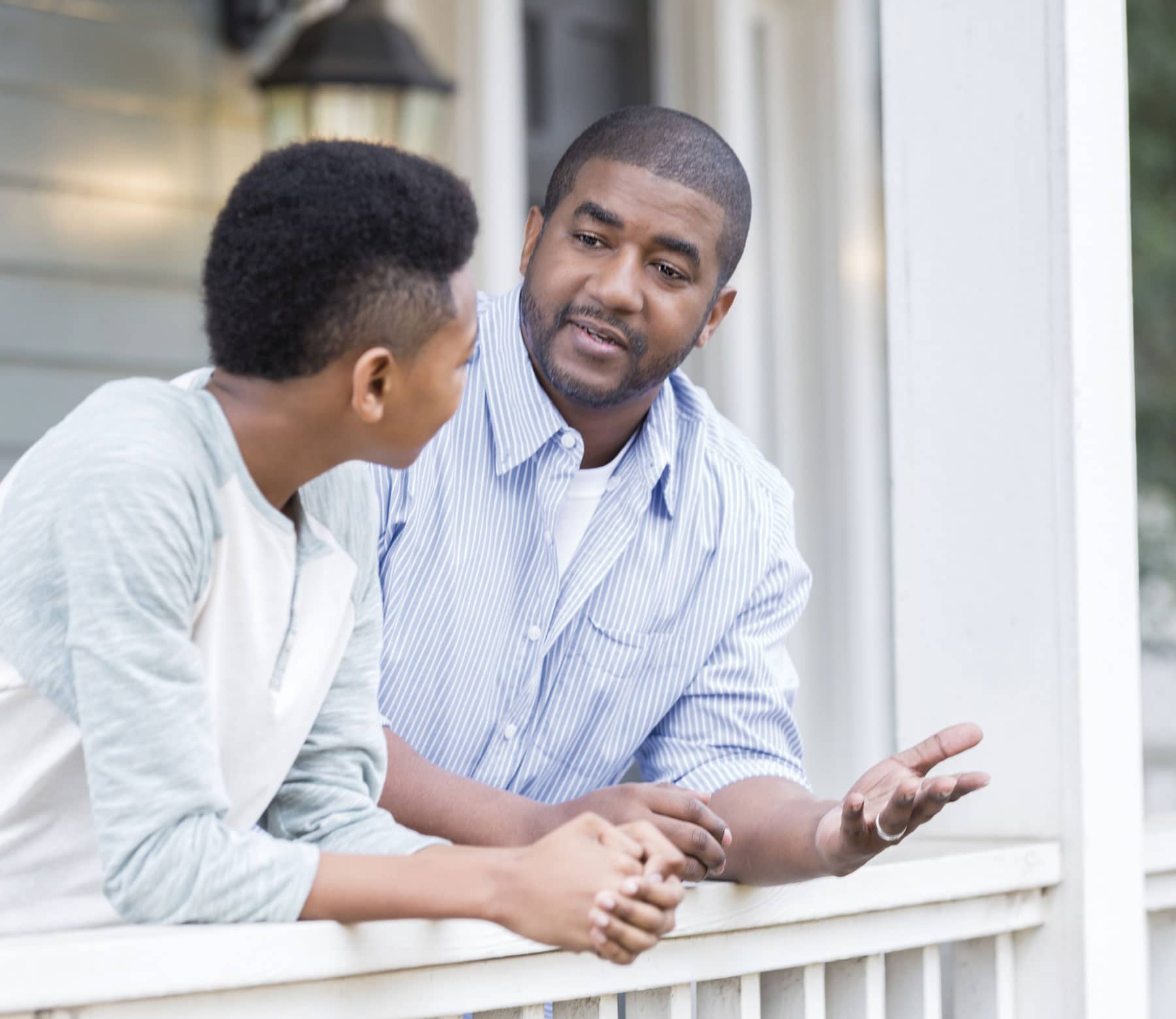
Creating a safe place at home makes it easier to talk about violence and trauma.
In the United States, four out of ten adolescents have directly witnessed violence, 17 percent have been physically assaulted, and eight percent have experienced sexual assault. These rates are even higher for teens from marginalized or oppressed groups.
Experiencing trauma affects everyone differently. Most people who experience a traumatic event don’t develop post-traumatic stress disorder (PTSD), but teens are at a higher risk. It is estimated that 75 percent of children who experience a school shooting and 90 percent of children who are sexually abused develop PSTD. Experiencing trauma can interfere with a teen’s cognitive and social development and increase academic problems, making them more likely to engage in risky behavior such as using substances.
While violence portrayed in the news and on social media has been a concern for some time, sharing videos containing police brutality, school violence, and hate crimes has amplified the concerns for parents.
Here are five practical tips that you can use to talk to your teen about violence and trauma.
Create a safe place for emotions
Creating a safe place for emotions will allow your teen to share if they are feeling confused or overwhelmed. Listen first and ask questions second. It may take several conversations to establish a connection, so your best bet is to remain calm and consistent. Try not to let your own worries direct the conversation; instead, create space for the free expression of emotions they are experiencing. Remind them frequently that you are a trusted resource they can rely on, no matter what.
Invite your teen to share thoughts and feelings
Invite your teen to share their thoughts and feelings about what they have been experiencing, reading, or viewing in the news and online. Here are some examples of how to get the conversation started:
- “I was reading in the news about the protests today. I’m curious what you think about what’s going on?”
- “Have you talked to any of your friends about what happened?”
- “What’s happening at school sounds like a lot to handle. I’m a listening ear if you would like to talk.”
Creating safety at home is essential
Creating a home-based environment of supportive safety where your teen can find acceptance and consistency is essential. Provide reassurance that you are learning together.
It is important for teens and young adults to hear that we don’t have all the answers but are open to learning and understanding different perspectives. Learning together and discussing these topics as a family creates safety and connection—both antidotes to trauma.
Finding new options
Finding an experienced clinician who specializes in adolescent mental health can be a huge help in navigating the complex process of resolving trauma. Today, new options such as teletherapy are emerging to support teens and young adults regardless of geographic location.
Posted in: Youth & Teen

Comment Policy: All viewpoints are welcome, but comments should remain relevant. Personal attacks, profanity, and aggressive behavior are not allowed. No spam, advertising, or promoting of products/services. Please, only use your real name and limit the amount of links submitted in your comment.
You Might Also Like...
Divorce – How Do We Tell The Kids?
This is one of the most frequent questions we at Kids’ Turn receive from parents starting in the separation or divorce process. It is almost always worded as “How do […]
Nurturing Young Entrepreneurs – June 5 Lemonade Day and Pennies on Purpose
I was just four years old when the health department (also known as Mom) shut down my first business, a door to door enterprise selling baggies of strawberries picked out […]

9 Great Apps To Help High-Schoolers Bound for College
Even though this year looks very different for students planning to attend college next year, some things never change. Typically, colleges and universities want to receive applications this month for […]

North State Youth Become Resilient, Adaptable and Ready for Work and Life through Local 4-H Clubs
Every child is valuable and deserves the support and freedom to choose their own path. This is one of the core beliefs of 4-H, America’s largest youth development organization which […]