As a child, did you, like me, slog through piano scales and boring “beginner” music? I wanted to play the piano (imagining tickling the keys like with my favorite songs like a pro), but quickly grew bored and resistant to learning to read music slowly, note by note, just to play uninspiring tunes to which I could not in the least relate. Sound familiar?
During a conversation I recently had with retired music teacher and grandmother Karen Siegel, she revealed there is a much easier and more enjoyable way to learn to play a piano or ultimately any musical instrument.
 Retirement brings more opportunities to mentor
 Retirement brings more opportunities to mentor
Karen taught music in public schools for 35 years in Modoc County, instructing students in music class, band and choir from elementary school to high school, eventually settling back to teaching at the elementary school level before retiring in 2012. But for Karen, retiring just meant more time to enjoy passing on her passion for music to her grandchildren and volunteering to teach music at a local preschool and to troubled youth involved in the court system.
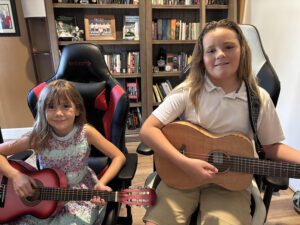
Karen’s greatest joy comes from sharing her love of music with eager young ones, and children love learning music under her guidance. To foster a love of music and make playing an instrument easy and fun for children, she employs an innovative method of teaching music developed by Neil Moore, called Simply Music.
Musical challenge inspires pioneering process
An Australian who had been playing the piano since he was seven years old, Neil became a music teacher and one day he was asked to teach a blind student. In working out just how to teach someone who couldn’t read music, Neil came up with a method of learning to play the piano using shapes and patterns. Through this pioneering method, children begin playing familiar tunes they love immediately, experimenting with music and rhythm. They learn to read music later, after they have already experienced the joy of playing music they love.
“It sometimes difficult for parents to accept that it is OK for their kids to learn to play without learning to read notes at first,” says Karen. “But children can learn to play faster and learn harder music faster” with the Simply Music method. Counts and notes are slowly introduced. “You don’t start out walking, you start crawling,” Karen says. “You don’t start out reading a novel, you learn through auditory means,” (having stories read to you.)
Karen tells of one child who was autistic whom she taught to play the piano with this method and says “It was incredible how he just took off. He would sleep in a sleeping bag near the piano because he didn’t want to be away from the piano.”
Making the Golden Years count
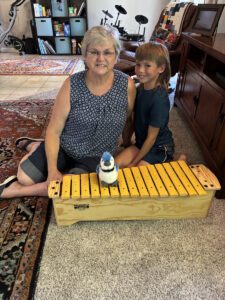
Karen enjoys caring for her two grandsons after school several days a week, playing a variety of instruments with them and passing on her passion for music. She has taught music at her grandson JP’s preschool, where the children sing with puppets and play simple instruments. She tried to bring in songs that go with the units the children are currently learning.
For Karen, as for many retirees and grandparents, the “Golden Years” provide a precious opportunity to mentor their grandchildren and other young ones, passing on a lifetime of experience, valuable life skills and a passion for life and all it has to offer.
To find a music teacher near you, go to northstateparent.com/resources/arts/music-instruction. If you or our child would like to use about the Simply Music method to learn to play the piano and there isn’t a teacher near you using this method, go to simplymusic.com. They offer a self-study program that promises students of all ages will be able to improvise and play great sounding blues, classical, contemporary and accompaniment pieces from their very first lessons.
Posted in: Grandparenting

Comment Policy: All viewpoints are welcome, but comments should remain relevant. Personal attacks, profanity, and aggressive behavior are not allowed. No spam, advertising, or promoting of products/services. Please, only use your real name and limit the amount of links submitted in your comment.
You Might Also Like...
Grandparents & Relative Caregivers Support Group
If you are struggling to care for a child who has experienced trauma, you are not alone. Raising relative children who have experienced trauma is hard. It helps to talk […]